
The Evolution of Programming: From Files to Agents in 2025
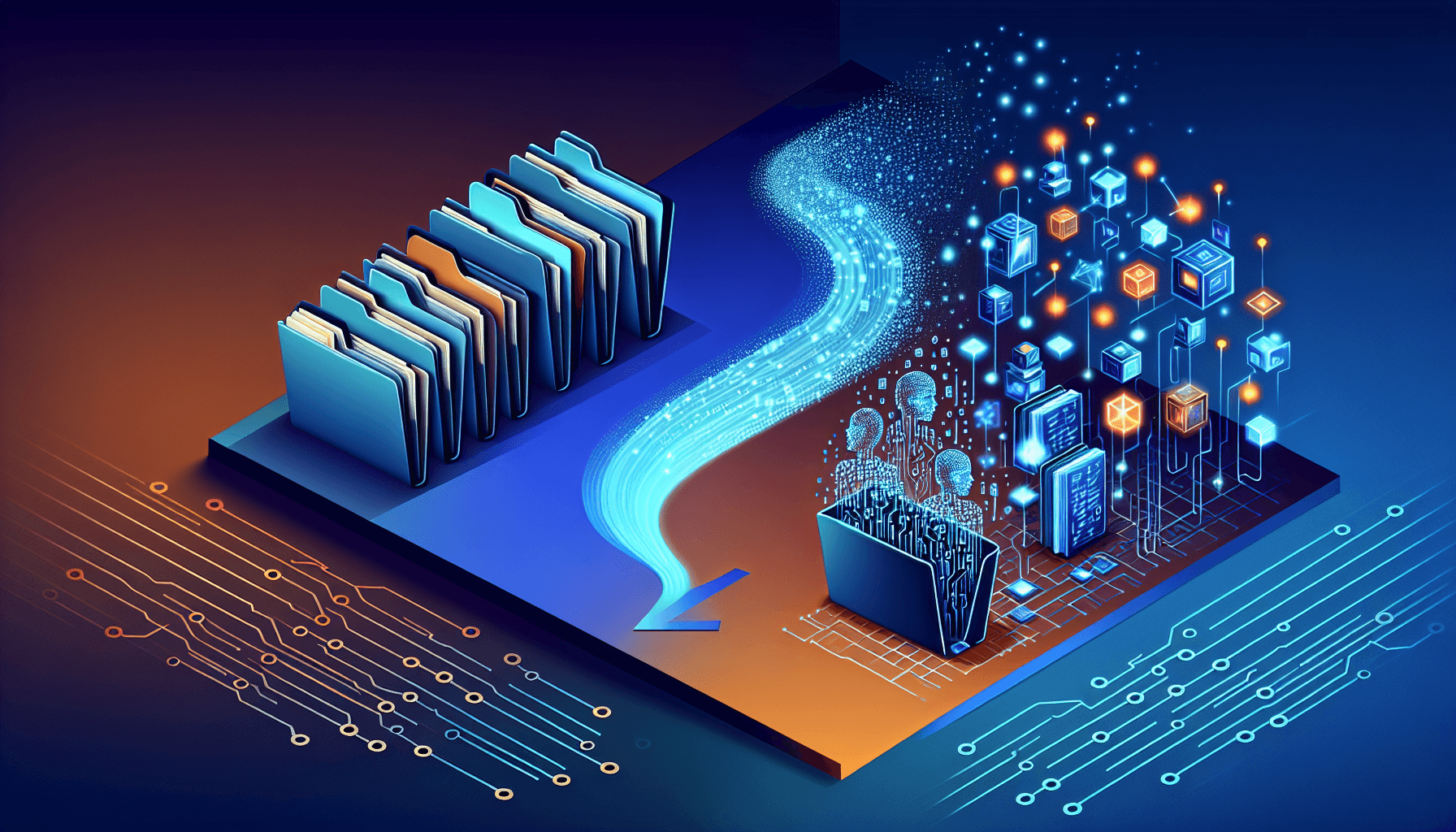
Programming's Fundamental Shift: Beyond Files and IDEs
The programming landscape is undergoing a seismic transformation that challenges everything we thought we knew about software development. While many predicted the death of traditional development environments, industry leaders are revealing a more nuanced reality: we're not abandoning programming—we're evolving to a higher level of abstraction where the basic unit isn't a file, but an intelligent agent.
"Expectation: the age of the IDE is over. Reality: we're going to need a bigger IDE," explains Andrej Karpathy, former VP of AI at Tesla and OpenAI researcher. "It just looks very different because humans now move upwards and program at a higher level - the basic unit of interest is not one file but one agent. It's still programming."
This sentiment is echoed in discussions about the evolution of programming and how intelligent development environments will become more capable rather than obsolete.
This shift represents the most significant change in programming paradigms since object-oriented programming emerged in the 1980s, with profound implications for how developers work, how teams are structured, and how software costs are managed.
The Agent-First Development Paradigm
The transition from file-based to agent-based programming is creating entirely new categories of development tools and workflows. Karpathy envisions IDEs evolving into "agent command centers" designed for managing teams of intelligent agents rather than individual code files.
"I want to see/hide toggle them, see if any are idle, pop open related tools (e.g. terminal), stats (usage), etc.," Karpathy describes his vision for next-generation development environments. This represents a fundamental reimagining of the developer experience, where orchestrating AI agents becomes as important as writing code.
The implications extend beyond individual productivity to organizational structure itself. As Karpathy notes, "All of these patterns as an example are just matters of 'org code'. The IDE helps you build, run, manage them. You can't fork classical orgs (eg Microsoft) but you'll be able to fork agentic orgs."
This concept of "organizational code" suggests that entire business processes and team structures could become programmable, version-controlled, and deployable—a radical departure from traditional corporate hierarchies.
The Autocomplete vs. Agents Debate
Not all developers are rushing toward full agent automation. ThePrimeagen, a prominent developer advocate at Netflix, argues for a more measured approach: "I think as a group (swe) we rushed so fast into Agents when inline autocomplete + actual skills is crazy. A good autocomplete that is fast like supermaven actually makes marked proficiency gains, while saving me from cognitive debt that comes from agents."
This perspective highlights a critical concern about maintaining code comprehension and developer skill. ThePrimeagen warns that "with agents you reach a point where you must fully rely on their output and your grip on the codebase slips." This tension between productivity gains and maintaining technical competency is becoming a defining issue for development teams.
The debate reflects broader questions about the optimal human-AI collaboration model in software development. While tools like Cursor's tab completion receive praise for enhancing existing developer workflows, full agent systems raise questions about long-term skill development and code ownership.
Infrastructure Challenges in the AI-First Era
The shift to agent-based development introduces new categories of technical challenges. Karpathy's experience with system failures reveals the fragility of AI-dependent workflows: "My autoresearch labs got wiped out in the oauth outage. Have to think through failovers. Intelligence brownouts will be interesting - the planet losing IQ points when frontier AI stutters."
This concept of "intelligence brownouts"—periods when AI systems experience degraded performance or outages—represents a new category of business risk. As organizations become increasingly dependent on AI agents for core development work, the reliability of AI infrastructure becomes as critical as traditional cloud services.
The operational complexity of managing agent-based systems is already evident in current implementations. Karpathy describes using "watcher scripts that get the tmux panes and look for e.g. 'esc to interrupt', and send keys to whip if not present" just to keep agents running continuously. These workarounds highlight the nascent state of agent orchestration tools.
The Open Source Hardware Revolution
Parallel to the software evolution, hardware infrastructure is also transforming. Chris Lattner, CEO of Modular AI, announced plans that could democratize AI development: "We aren't just open sourcing all the models. We are doing the unspeakable: open sourcing all the gpu kernels too. Making them run on multivendor consumer hardware."
This move toward open-source GPU kernels could significantly reduce the barriers to AI development and deployment, potentially disrupting the current cloud-centric model where organizations pay premium rates for AI compute resources.
The Remote Development Revolution
Developers are also reimagining where programming happens. Pieter Levels, founder of PhotoAI and NomadList, demonstrates a fully cloud-based approach: "Got the 🍋 Neo to try it as a dumb client with only @TermiusHQ installed to SSH and solely Claude Code on VPS. No local environment anymore. It's a new era."
This shift toward remote development environments, combined with AI coding assistants, is creating new possibilities for distributed teams and potentially changing the economics of development infrastructure.
AI Tools Expanding Beyond Code
The programming evolution extends beyond pure software development into adjacent domains. Matt Shumer, CEO of HyperWrite, shares an example of AI's expanding capabilities: "Kyle sold his company for many millions this year, and STILL Codex was able to automatically file his taxes. It even caught a $20k mistake his accountant made."
This demonstrates how programming-adjacent AI tools are automating complex, rule-based tasks across various domains, suggesting that the agent-first paradigm will extend far beyond traditional software development.
Cost Intelligence in the Agent Era
As organizations transition to agent-based development, understanding and managing AI costs becomes increasingly critical. Unlike traditional software licensing models, AI agent usage involves complex, variable costs based on compute consumption, token usage, and model selection.
The shift from predictable monthly software subscriptions to usage-based AI services requires new approaches to cost optimization and budget management. Organizations need visibility into which agents are consuming resources, how efficiently they're operating, and where optimization opportunities exist.
Key Takeaways for Development Teams
The programming landscape's evolution presents both opportunities and challenges for development organizations:
• Embrace hybrid approaches: Rather than choosing between traditional coding and full automation, successful teams will likely combine inline AI assistance with selective agent deployment
• Invest in agent orchestration: As agent-based development matures, tools for managing, monitoring, and coordinating multiple AI agents will become essential infrastructure
• Plan for intelligence brownouts: Organizations should develop fallback strategies for periods when AI services experience degraded performance or outages
• Rethink cost models: The shift from predictable software licensing to variable AI compute costs requires new approaches to budgeting and cost optimization
• Maintain technical competency: Teams must balance productivity gains from AI assistance with preserving core programming skills and system understanding
The transformation from file-based to agent-based programming represents more than a technological shift—it's a fundamental reimagining of how software gets built, who builds it, and how development teams operate. Organizations that successfully navigate this transition will need to balance the promise of increased productivity with the challenges of maintaining quality, control, and cost efficiency in an AI-first development world.