
Trusted by everyone from startups to the Fortune 500
User discussions and social mentions of "Grafana AI" are relatively sparse, with more focus on its integration in broader platforms and setups rather than in-depth, feature-specific discussions. The tool is appreciated for its ability to integrate with other modern systems, like n8n, to facilitate diverse technical operations. There aren't any specific user complaints noted in the social mentions available, nor is there direct feedback on its pricing model. Overall, "Grafana AI" appears to hold a neutral to positive reputation, being a component in larger, innovative projects.
Mentions (30d)
1
Reviews
0
Platforms
2
GitHub Stars
73,464
13,802 forks
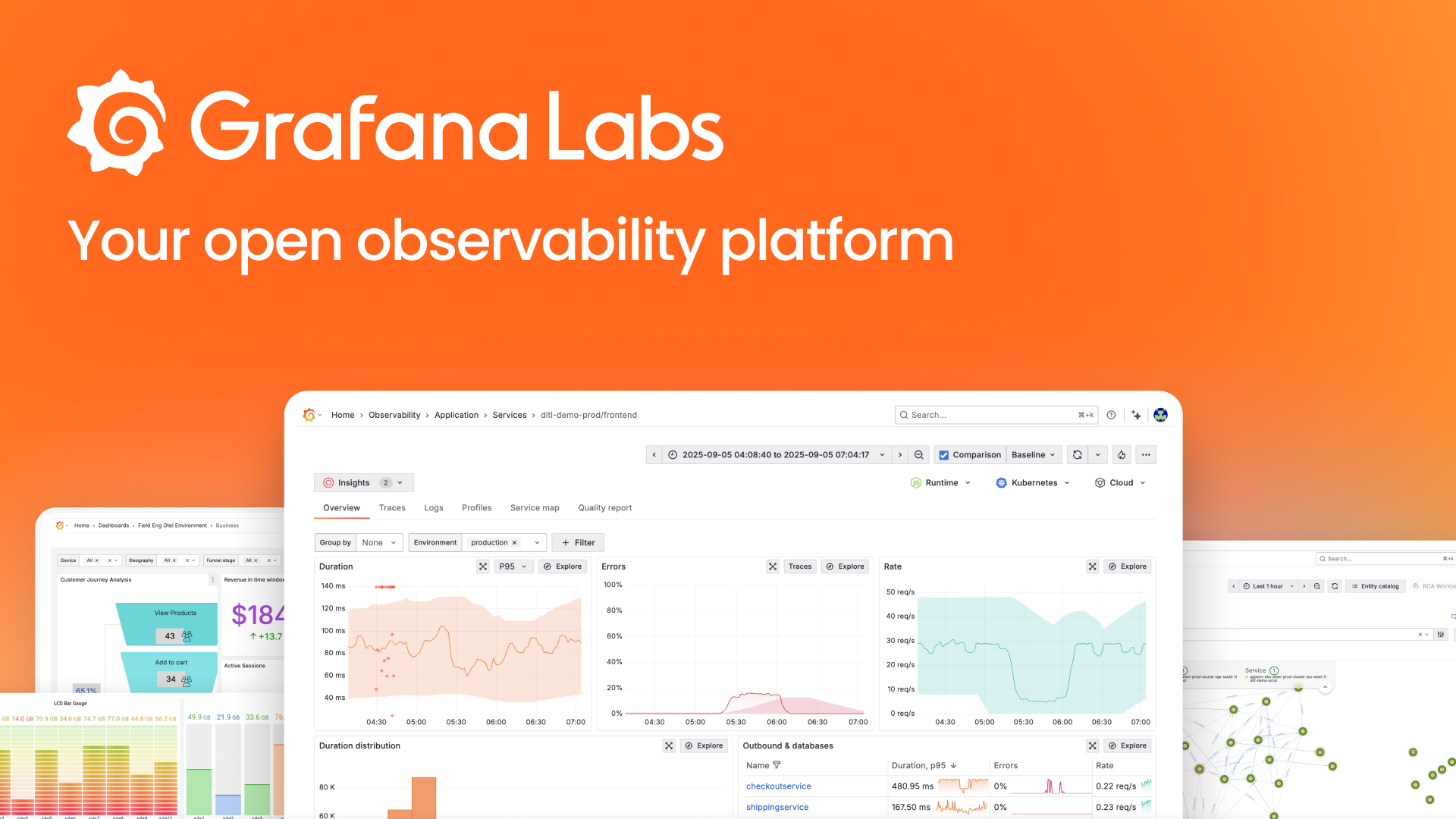
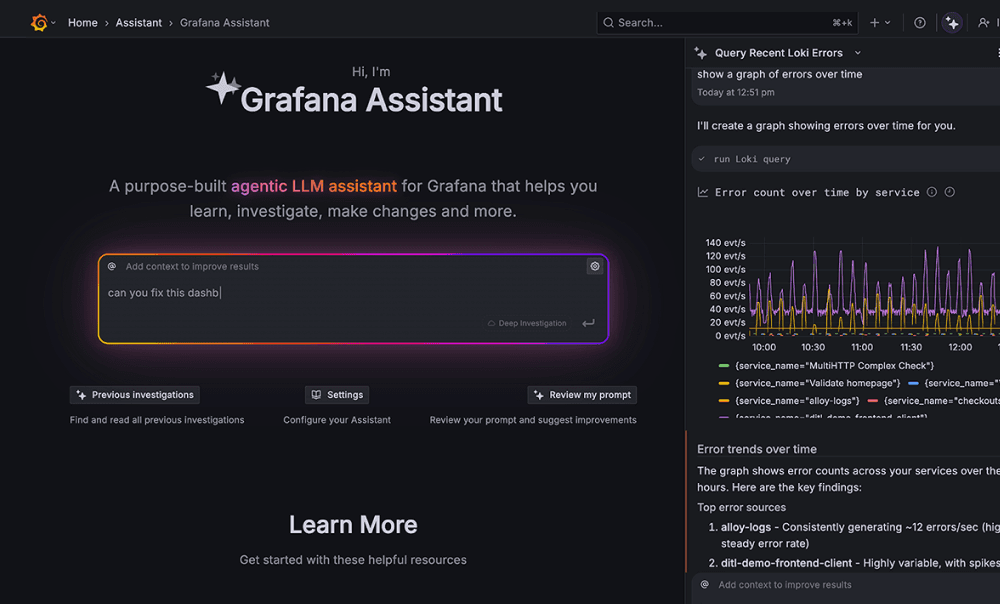

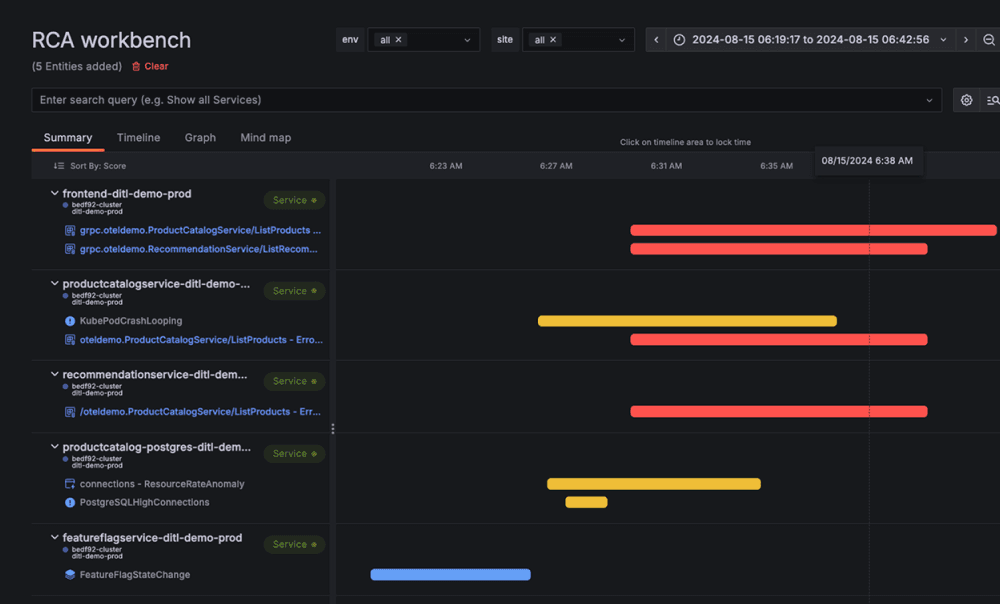
User discussions and social mentions of "Grafana AI" are relatively sparse, with more focus on its integration in broader platforms and setups rather than in-depth, feature-specific discussions. The tool is appreciated for its ability to integrate with other modern systems, like n8n, to facilitate diverse technical operations. There aren't any specific user complaints noted in the social mentions available, nor is there direct feedback on its pricing model. Overall, "Grafana AI" appears to hold a neutral to positive reputation, being a component in larger, innovative projects.
Features
Use Cases
Industry
information technology & services
Employees
1,800
Funding Stage
Series D
Total Funding
$805.2M
6,518
GitHub followers
970
GitHub repos
73,464
GitHub stars
20
npm packages
11
HuggingFace models
Pricing found: $0, $19 / month, $25,000 / year, $0, $6.50 / 1k
Two months of coding with Claude code
My background started in sales, moved to product/tech about ten years ago culminating in my role as chief product officer at a large debt relief company. Today, around 7:30 am, after my fourth all nighter in a row I released a product (in stealth no heavy marketing yet) after two months of deep work with over 1,000 commits and a lot of sleepless nights. I used VS code, with ClaudeCode. Mostly opus high effort. Lots of CLI, no MCP - huge win - read about so many issues with MCP and it was never a thing. Built on/with railway, supabase, voyage AI, pinecone, resend, grafana, multi-AI provider with custom fallback (almost used liteLLM, and chose custom days before their incident), cloudflare for dns/R2/zerotrust, sentry (incredible tool - major part of how I shipped as much as I did as quickly as I did), redis upstash, bullMQ, Unsplash, stripe, huskyCI, Semgrep, and probably a few more I am missing. - Is it going to sell? I don’t know. - Is it technically capable and unique? I think so - Am I super proud of myself? Hell yes. - Are there bugs? You tell me, typically squash then in staging environment with help of sentry, but something may have gotten past me certainly! - What does it do? Convert web visitors to leads with custom agents, in under 5 minutes. Roast me, or give me some feedback! www.wengrow.app Moment that stand out: - The velocity in general - Shipping enterprise level SSO (supabase auth) in a few hours - Rapid CRO optimization of onboarding flow. having done this work before leading large engineering and product teams the work I did in 24 hours would have taken a cross functional team of 5 weeks at a minimum. - Cookie consent management. Having previously spent months at prior job trying to do CCM right with a paid tool, I was able to set up a compliant CCM process on www in hours with c15t including audit logs sent to my Supabase DB, and proper handing of California nuances. - so much more but I need to catch up on some sleep submitted by /u/berrism [link] [comments]
View originalOne command generates your CLAUDE.md from your actual codebase — plus 11 other AI tool configs
If you use Claude Code, you've probably hand-written a CLAUDE.md. But does it reflect what your CI actually enforces? Does it know about the lint rules, test frameworks, and build steps that your GitHub Actions runs? crag reads your project — CI workflows, package manifests, directory structure — and generates a governance.md that captures everything. Then it compiles that to CLAUDE.md plus 11 other formats: npx @whitehatd/crag It auto-detects your stack, extracts quality gates from CI, and generates CLAUDE.md with architecture context, anti-patterns, and code style — the stuff Claude needs to write code that actually passes your CI. If you also use Cursor, Copilot, or other tools, the same governance.md compiles to all of them. One source of truth. We ran it on 50 top repos. Grafana's CLAUDE.md is 1 line — crag found 67 gates. 9 of 13 top projects have zero AI config at all. No LLM. Deterministic. 500ms. GitHub: https://github.com/WhitehatD/crag submitted by /u/Acceptable_Debate393 [link] [comments]
View originalI got tired of 3 AM PagerDuty alerts, so I built an AI agent to fix cloud outages while I sleep. (Built with GLM-5.1)
If you've ever been on-call, you know the nightmare. It’s 3:15 AM. You get pinged because heavily-loaded database nodes in us-east-1 are randomly dropping packets. You groggily open your laptop, ssh into servers, stare at Grafana charts, and manually reroute traffic to the European fallback cluster. By the time you fix it, you've lost an hour of sleep, and the company has lost a solid chunk of change in downtime. This weekend for the Z.ai hackathon, I wanted to see if I could automate this specific pain away. Not just "anomaly detection" that sends an alert, but an actual agent that analyzes the failure, proposes a structural fix, and executes it. I ended up building Vyuha AI-a triple-cloud (AWS, Azure, GCP) autonomous recovery orchestrator. Here is how the architecture actually works under the hood. The Stack I built this using Python (FastAPI) for the control plane, Next.js for the dashboard, a custom dynamic reverse proxy, and GLM-5.1 doing the heavy lifting for the reasoning engine. The Problem with 99% of "AI DevOps" Tools Most AI monitoring tools just ingest logs and summarize them into a Slack message. That’s useless when your infrastructure is actively burning. I needed an agent with long-horizon reasoning. It needed to understand the difference between a total node crash (DEAD) and a node that is just acting weird (FLAKY or dropping 25% of packets). How Vyuha Works (The Triaging Loop) I set up three mock cloud environments (AWS, Azure, GCP) behind a dynamic FastApi proxy. A background monitor loop probes them every 5 seconds. I built a "Chaos Lab" into the dashboard so I could inject failures on demand. Here’s what happens when I hard-kill the GCP node: Detection: The monitor catches the 503 Service Unavailable or timeout in the polling cycle. Context Gathering: It doesn't instantly act. It gathers the current "formation" of the proxy, checks response times of the surviving nodes, and bundles that context. Reasoning (GLM-5.1): This is where I relied heavily on GLM-5.1. Using ZhipuAI's API, the agent is prompted to act as a senior SRE. It parses the failure, assesses the severity, and figures out how to rebalance traffic without overloading the remaining nodes. The Proposal: It generates a strict JSON payload with reasoning, severity, and the literal API command required to reroute the proxy. No Rogue AI (Human-in-the-Loop) I don't trust LLMs enough to blindly let them modify production networking tables, obviously. So the agent operates on a strict Human-in-the-Loop philosophy. The GLM-5.1 model proposes the fix, explains why it chose it, and surfaces it to the dashboard. The human clicks "Approve," and the orchestrator applies the new proxy formation. Evolutionary Memory (The Coolest Feature) This was my favorite part of the build. Every time an incident happens, the system learns. If the human approves the GLM's failover proposal, the agent runs a separate "Reflection Phase." It analyzes what broke and what fixed it, and writes an entry into a local SQLite database acting as an "Evolutionary Memory Log". The next time a failure happens, the orchestrator pulls relevant past incidents from SQLite and feeds them into the GLM-5.1 prompt. The AI literally reads its own history before diagnosing new problems so it doesn't make the same mistake twice. The Struggles It wasn't smooth. I lost about 4 hours to a completely silent Pydantic validation bug because my frontend chaos buttons were passing the string "dead" but my backend Enums strictly expected "DEAD". The agent just sat there doing nothing. LLMs are smart, but type-safety mismatches across the stack will still humble you. Try it out I built this to prove that the future of SRE isn't just better dashboards; it's autonomous, agentic infrastructure. I’m hosting it live on Render/Vercel. Try hitting the "Hard Kill" button on GCP and watch the AI react in real time. Would love brutal feedback from any actual SREs or DevOps engineers here. What edge case would break this in a real datacenter? submitted by /u/Evil_god7 [link] [comments]
View originalDP built with claude
Hi everyone, I built a digital platform for SMEs to bridge the gap between SAP B1 and modern tools like n8n, Grafana, ai and BI. What it does: It syncs materials, warehouse locations, inventory, and order data from SAP B1 (or other DBs) to a centralized PostgreSQL database. Users can perform centralized operations and real-time analysis through a unified SSO interface. How Claude helped in the process: Database Integration: I used Claude to generate the schema mapping between SAP's legacy tables and my PostgreSQL database. Automation Logic: Claude assisted in writing the Python/JS scripts used within n8n nodes to handle manual and scheduled data polling. Data Analysis: I integrated Claude's API into the platform to provide automated insights based on the inventory data stored in PostgreSQL. Status: It is free to try No affiliate links or job requests submitted by /u/foodsaid [link] [comments]
View originalagente de IA creado con claude
Some of you might remember when I posted about SENTINEL — a security audit tool I built with Claude for scanning VPS servers, MikroTik routers, and n8n instances. Well, I didn't stop there. SENTINEL is now one skill inside a much bigger project called AETHER — an AI agent framework I've been building with Claude Code for the past 6 months. What is AETHER? It's an AI agent that I talk to from Telegram like a coworker. I tell it what I need in plain language and it gets it done. Some real examples from today: "How are the servers?" → Full health check, 10 Docker containers listed, all running. "Any suspicious IPs?" → 5 malicious IPs detected and blocked. One had 291 requests with 114 errors. "Send an email to José, meeting Wednesday at 12" → Drafts the email, shows me the preview, I say "confirm", email sent. I open Gmail and there it is. "Tech news?" → Summary of 7 articles from multiple sources. "Any new emails?" → Lists unread messages with sender, subject and summary. "List n8n workflows" → 6 active workflows listed. All from my phone. No SSH. No dashboards. Just Telegram. How Claude helped me build this: I'm not a developer. I'm 50 years old and I run a small telecom company. Claude Code has been my engineering team. The architecture decisions and product vision are mine, but Claude writes the code. What started as a simple Python bot in September 2025 that returned {"status": "healthy"} is now a full framework with: Python + TypeScript + FastAPI + PostgreSQL + Redis + Docker SENTINEL integrated as one of 25+ skills 110+ tools total Telegram, Discord, WhatsApp, REST API, WebSocket Semantic memory (pgvector) — it remembers context across sessions Security: prompt injection firewall, session guard, rate limiting, 39 protections Prometheus + Grafana for monitoring But here's the crazy part: I'm running 4 instances of AETHER right now, each doing a completely different job: AETHER Principal — manages my VPS infrastructure (the one I showed above) AETHER Trader — trading terminal with technical analysis, Binance integration, risk advisor Divina — web agent for a beauty business Tecofri — telecom expert for my company's website Same codebase. Different skills enabled. Different personality configured. SENTINEL went from being a standalone project to being one skill inside a much larger ecosystem. And it's all built with Claude. Some late nights (4am sessions are not uncommon), but the results speak for themselves. Published the first LinkedIn posts today and the response has been great. Just wanted to share the progress with the community that saw the beginning. Thanks to everyone who gave feedback on SENTINEL — it pushed me to keep going. What would you build with an AI agent framework? submitted by /u/Relative-Cattle5408 [link] [comments]
View originalI built 13 MCP servers
I built an MCP server collection to control my homelab with Claude AI. been running a homelab for a couple years, always hated jumping between tabs. portainer for containers, adguard for dns, ha for lights, ssh for everything else. got annoying enough that i just built something to fix it MCP servers that connect claude desktop to all of it. now i just ask some stuff i actually use it for: "which containers are unhealthy and why"—pulls logs automatically "Who is connected to my network?" "turn off everything in the living room" covers ha, openwrt, portainer, pi/linux, adguard, pihole, jellyfin, grafana, truenas, proxmox, opnsense, mikrotik setup wizard writes the claude config automatically, took me like 5 min https://github.com/HRYNdev/HomeLab-MCP free, mit, no telemetry. few servers are beta since i dont have every piece of hardware — bug reports welcome not affiliated with anthropic submitted by /u/Low_List_5103 [link] [comments]
View originalRepository Audit Available
Deep analysis of grafana/grafana — architecture, costs, security, dependencies & more
Yes, Grafana AI offers a free tier. Pricing found: $0, $19 / month, $25,000 / year, $0, $6.50 / 1k
Key features include: Products Solutions, Telemetry, Still have questions?, Get every update, Grafana Cloud, Solutions, Integrations, Open Source.
Grafana AI is commonly used for: Adobe Analytics, Amazon Aurora, Amazon DynamoDB, Apache ActiveMQ, Apache Airflow, Apache Cassandra.
Grafana AI integrates with: Prometheus, Graphite, Elasticsearch, InfluxDB, MySQL, PostgreSQL, CloudWatch, Azure Monitor, Google Cloud Monitoring, Loki.
Grafana AI has a public GitHub repository with 73,464 stars.

Start with Grafana AI Assistant and ask your observability stack anything
Apr 8, 2026
Based on 11 social mentions analyzed, 18% of sentiment is positive, 73% neutral, and 9% negative.


