Ship messaging without limits.
Users generally appreciate Knock for its effective functionality and reliability, often giving it high ratings, like 4 to 5 stars out of 5 on platforms like G2. However, specific social mentions of "Knock" are minimal, making it difficult to identify detailed complaints or praise related to its features. Pricing information is not directly mentioned, so user sentiment on costs remains unclear. Overall, while its name appears frequently, it seems to maintain a positive reputation based on the limited feedback available.
Mentions (30d)
13
3 this week
Avg Rating
4.5
3 reviews
Platforms
3
Sentiment
15%
5 positive
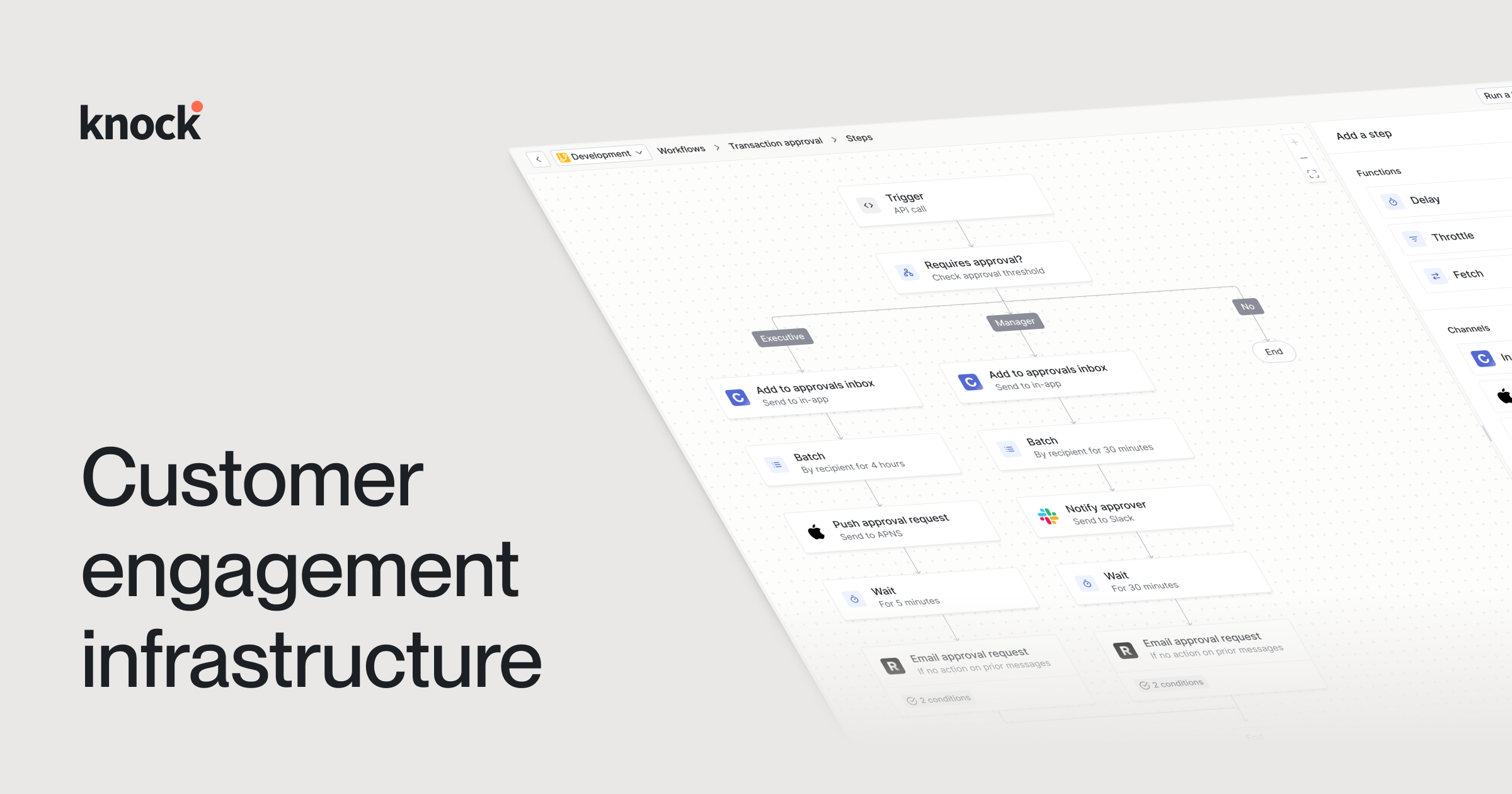
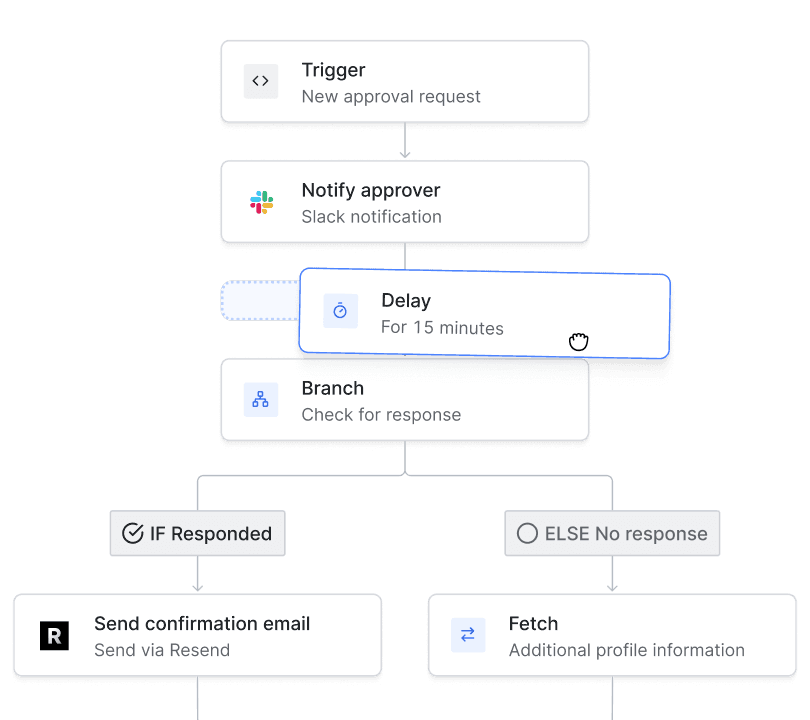

Users generally appreciate Knock for its effective functionality and reliability, often giving it high ratings, like 4 to 5 stars out of 5 on platforms like G2. However, specific social mentions of "Knock" are minimal, making it difficult to identify detailed complaints or praise related to its features. Pricing information is not directly mentioned, so user sentiment on costs remains unclear. Overall, while its name appears frequently, it seems to maintain a positive reputation based on the limited feedback available.
Features
Use Cases
Industry
information technology & services
Employees
27
Funding Stage
Series A
Total Funding
$18.0M
Show HN: I turned a sketch into a 3D-print pegboard for my kid with an AI agent
We have pegboards and plywood all over our apartment, and I had an idea to make a tiny pegboard for my kid, Oli. So I naturally cut the wood, drilled in the holes, sat down at the computer to open Fusion 360 and spend an hour or two drawing the pieces by hand.<p>Then I looked at the rough sketch Oli and I had made together, took a photo of it, pasted it into Codex, and gave it just two dimensions: the holes are 40mm apart and the pegs are 8mm wide.<p>To my surprise, 5 minutes later my 3D printer was heating up and printing the first set.<p>I ran it a few times to tune the dimensions for ideal fit, but I am posting the final result as a repository in case anyone else wants to print one, tweak it, or have fun with it too. I am already printing another one to hang on our front door instead of a wreath, so people visiting us have something fun and intriguing to play with while they knock.<p>This is also going onto my list of weird uses of AI from the last few months.
View originalPricing found: $.01, $.005, $.005, $.05, $.05
g2
What do you like best about Knock.?The best part about Knock was the ease of use, accessibility to leads, and streamlined product design. Review collected by and hosted on G2.com.What do you dislike about Knock.?From my experience, there were times when the leads were populating from other leasing sights (not actual renters). Review collected by and hosted on G2.com.
What do you like best about Knock.?It's doing the job well, and it's free. I was looking for a virtual office to gather my team online (because of remote work because of Covid, you know...). After testing several products, I just decided to use Knock as it's working very well. Review collected by and hosted on G2.com.What do you dislike about Knock.?It's not easy to invite people if they are not part of your team. I would like this to be improved. Review collected by and hosted on G2.com.
What do you like best about Knock.?The features the most useful are the rooms to have spontaneous conversations (audio or chat). It's really nice to speak with your teamates without the need to launch a specific software and invite a coworker. Review collected by and hosted on G2.com.What do you dislike about Knock.?It's still a beta test so maybe it will be upgraded soon. Have a chat video will be nice. Review collected by and hosted on G2.com.
How do you stop yourself from scope-creeping past the MVP when working with Claude?
I work as an AI engineer and use Claude heavily — Claude Code, API, Projects. The problem isn't that it's not productive, it's that it's too productive. Every time I'm close to shipping something minimal, I see another gap and Claude can knock it out in ten minutes, so I just... keep going. Then a week later I've got something half-built across five features instead of one feature actually in users' hands. Some of it is real gaps I'm noticing. Some of it is the MVP feeling too thin to ship and me unconsciously padding it out. Both feed each other. Looking for advice from people who've actually figured this out. How do you keep scope locked when the cost of adding "one more thing" is basically zero? Any concrete patterns — rules in your CLAUDE.md, a v2 parking lot you actually use, deadlines you set before you start, a specific, strict workflow? How do you make yourself ship the embarrassingly thin version when Claude is right there offering to make it less embarrassing? Context: I mainly work solo on projects - I'm essentially a satellite dev in a company wanting to get to grips with AI. I'm also traditionally a software engineer, not just a vibe coder, so I know all the practices, I just can't stick to them. submitted by /u/bald_travels [link] [comments]
View originalI packaged a Claude Code skill to Github that fixes the "go to sleep" nagging
Built a Claude Code skill last night that fixes two things that were bugging me. Problem: The nagging. "Time to rest, you've earned it." Claude has no idea what my energy state is and I hate it when it interrupts work to tell me to sleep at noon LOL Solution: This skill instructs Claude to ask you if you are ready for a break or if you want to keep going. It's nice to have the check in but this keeps the interaction a conversation instead of a command from Claude. Problem 2: I'm legit addicted to Claude Code and I really do need to take a break but I don't want to stop making progress. Solution: This skill pairs the ask with suggestions of what tasks it could knock out while you're away so it can keep working. Tasks suggested tend to be ones that require few permissions and will take a long time to execute. Further, it front-loads permission requests so it's more likely to get the job done without further interaction. Skill repo + permission cheat-sheet: https://github.com/TheTalentCat/sleep-solution.git PRs welcome on the cheat-sheet especially since it gets more useful the more edge cases it covers. submitted by /u/ScriptureSlayer [link] [comments]
View originalWhen configuring a third-party AI large model on the MacBook Claude Code desktop client, an error message appears. How can this be resolved?
This is my GLM-4.6 model API configuration, and this error is really confusing me. I'm not sure which step went wrong. Does anyone know how to solve it? Are there any details like needing to configure environment variables? submitted by /u/TommyXuan [link] [comments]
View originalOpus 4.7 Low Vs Medium Vs High Vs Xhigh Vs Max: the Reasoning Curve on 29 Real Tasks from an Open Source Repo
TL;DR I ran Opus 4.7 in Claude Code at all reasoning effort settings (low, medium, high, xhigh, and max) on the same 29 tasks from an open source repo (GraphQL-go-tools, in Go). On this slice, Opus 4.7 did not behave like a model where more reasoning effort had a linear correlation with more intelligence. In fact, the curve appears to peak at medium. If you think this is weird, I agree! This was the follow-up to a Zod run where Opus also looked non-monotonic. I reran the question on GraphQL-go-tools because I wanted a more discriminating repo slice and didn’t trust the fact that more reasoning != better outcomes. Running on the GraphQL repo helped clarified the result: Opus still did not show a simple higher-reasoning-is-better curve. The contrast is GPT-5.5 in Codex, which overall did show the intuitive curve: more reasoning bought more semantic/review quality. That post is here: https://www.stet.sh/blog/gpt-55-codex-graphql-reasoning-curve Medium has the best test pass rate, highest equivalence with the original human-authored changes, the best code-review pass rate, and the best aggregate craft/discipline rate. Low is cheaper and faster, but it drops too much correctness. High, xhigh, and max spend more time and money without beating medium on the metrics that matter. More reasoning effort doesn't only cost more - it changes the way Claude works, but without reliably improving judgment. Xhigh inflates the test/fixture surface most. Max is busier overall and has the largest implementation-line footprint. But even though both are supposedly thinking more, neither produces "better" patches than medium. One likely reason: Opus 4.7 uses adaptive thinking - the model already picks its own reasoning budget per task, so the effort knob biases an already-adaptive policy rather than buying more intelligence. More on this below. An illuminating example is PR #1260. After retry, medium recovered into a real patch. High and xhigh used their extra reasoning budget to dig up commit hashes from prior PRs and confidently declare "no work needed" - voluntarily ending the turn with no patch. Medium and max read the literal control flow and made the fix. One broader takeaway for me: this should not have to be a one-off manual benchmark. If reasoning level changes the kind of patch an agent writes, the natural next step is to let the agent test and improve its own setup on real repo work. For this post, "equivalent" means the patch matched the intent of the merged human PR; "code-review pass" means an AI reviewer judged it acceptable; craft/discipline is a 0-4 maintainability/style rubric; footprint risk is how much extra code the agent touched relative to the human patch. I also made an interactive version with pretty charts and per-task drilldowns here: https://stet.sh/blog/opus-47-graphql-reasoning-curve The data: Metric Low Medium High Xhigh Max All-task pass 23/29 28/29 26/29 25/29 27/29 Equivalent 10/29 14/29 12/29 11/29 13/29 Code-review pass 5/29 10/29 7/29 4/29 8/29 Code-review rubric mean 2.426 2.716 2.509 2.482 2.431 Footprint risk mean 0.155 0.189 0.206 0.238 0.227 All custom graders 2.598 2.759 2.670 2.669 2.690 Mean cost/task $2.50 $3.15 $5.01 $6.51 $8.84 Mean duration/task 383.8s 450.7s 716.4s 803.8s 996.9s Equivalent passes per dollar 0.138 0.153 0.083 0.058 0.051 Why I Ran This After my last post comparing GPT-5.5 vs 5.4 vs Opus 4.7, I was curious how intra-model performance varied with reasoning effort. Doing research online, it's very very hard to gauge what actual experience is like when varying the reasoning levels, and how that applies to the work that I'm doing. I first ran this on Zod, and the result looked strange: tests were flat across low, medium, high, and xhigh, while the above-test quality signals moved around in mixed ways. Low, medium, high, and xhigh all landed at 12/28 test passes. But equivalence moved from 10/28 on low to 16/28 on medium, 13/28 on high, and 19/28 on xhigh; code-review pass moved from 4/27 to 10/27, 10/27, and 11/27. That was interesting, but not clean enough to make a default-setting claim. It could have been a Zod-specific artifact, or a sign that Opus 4.7 does not have a simple "turn reasoning up" curve. So I reran the question on GraphQL-go-tools. To separate vibes from reality, and figure out where the cost/performance sweet spot is for Opus 4.7, I wanted the same reasoning-effort question on a more discriminating repo slice. This is not meant to be a universal benchmark result - I don't have the funds or time to generate statistically significant data. The purpose is closer to "how should I choose the reasoning setting for real repo work?", with GraphQL-Go-Tools as the example repo. Public benchmarks flatten the reviewer question that most SWEs actually care about: would I actually merge the patch, and do I want to maintain it? That's why I ran this test - to gain more insight, at a small scale, into how coding ag
View originalChatGPT/Gemini saved me $4200 from a scam land lord and only took me 1-2 hours.
So I've been using ChatGPT and Gemini to not only learn things but help it process bulk work. I imagine I'm like most of the people here and have experience with applied AI, agents, know how LLMs work internally, etc. I moved out of San Francisco and my landlord tried to hold $4200 of a $5000 deposit for an apartment, with sham/fake claims about damage to the apartment, etc. Now, I COULD have spent a week reading all of the laws in San Francisco regarding tenant rights, etc. But ChatGPT/Gemini did it VERY fast. I used both of them collaboratively to fact check one another, make suggestions, make sure there were no flaws, etc Then periodically I would dump the context, start over again, so that it can give new review from a blank slate. It found that they were in violation of a new law called AB2801 (as well as a few others). The LLMs highlighted the parts that were in violation. It also found that they tried to charge me 100% of a SF Tenant fee that, while only $59, was still theft. They're only allowed to charge 50% so I had it change that to $29.50. Basically, they provided no paperwork, no receipts, no before after photos. All of that is now illegal in San Francisco. Gemini then cranked out an AMAZINGLY professional demand letter from JUST my notes. I just created a raw outline of what I wanted, based on its research, including all the metadata like their names, etc. Gemini EVEN drafted it as a PDF for me. What's great is that it also highlighted that, if I take her to small claims court, I can get the FULL deposit back PLUS 2x in punitive damages. That would have been about $17k. Anyway. An hour after I sent the demand letter, they didn't reply, they just send me the $4200 I demanded. I yielded $800 in some fees that were part of the lease so, if it made it to a judge, I would seem fair. Mind you, this was like about 2 hours of work on my part. I've been doing this non-stop this week and this workflow has saved me a MASSIVE amount of money. For example, I knocked down a car dealership charge from $1500 to $1000 because they tried to charge me for work I didn't need. Get that $$$ man! Score one for the little guy! submitted by /u/brainhack3r [link] [comments]
View originalSomething has snapped into place with the claude iOS app and I like it
With the new updates and new usage limits I’m actually productive from the iOS app. Crazy, I know 🤯 I have 4-5 instances of Claude cli running on my Mac mini. All set up with/remote-control . They are spinning up agents like nobodies business. Talking to each other via markdown feedback forms. Developing multiple libraries in parallel. And on the 100 $ plan (knock on wood) I’m still not getting rate limited. They are on to something here and I’m not opposed to it. The fact I can do all this stuff from the phone is just mind blowing. submitted by /u/Trekker23 [link] [comments]
View originalAlien Pinball Postmortem - How I made a full physics pinball game with Claude
Postmortem: Alien Pinball — built with Claude + ChatGPT + Suno + LittleJS Just shipped a browser pinball game. Short writeup of the AI workflow in case it's useful here. The game — Full physics pinball: multiball, an A-L-I-E-N rollover multiplier (caps at 5x), skill shots, escalating combos, outlane gutter saves, and a wizard-mode centipede boss you fight while juggling 3 balls. Browser, mobile-friendly, no install. Play it: https://focaccai.itch.io/alien-pinball Setup. Claude Code Max, Opus model for the heavy lifting. Roughly half my input was via speech-to-text — talking at the codebase rather than typing — the other half was typing plus a lot of manual code editing. It genuinely felt co-developed rather than code-generated: describe what I want, riff with Claude, dive in by hand to steer or clean up. Tool stack Code: Claude. All game logic, custom Box2D parts (slingshots, drop targets, spinners, ramps, ball locks, break targets), plus a full in-game table editor I built so I could drag/place/tune every part visually. Reusable for future pinball games. Art: ChatGPT image gen. I had Claude write the image prompts too. Music: Suno 5.5 — three tracks, lots of iteration to find the right vibe. Claude wrote the music prompts. Sounds: ZzFX — every sound generated procedurally at game start, no audio files. Claude tuned the parameters by ear-by-ear iteration. This combo was a joy with AI. Engine: LittleJS + Box2D WASM. Small, fast, AI handles it beautifully — minimal API surface, no framework ceremony to wade through. The art trick that actually worked. I exported a silhouette of the collision geometry (walls, ramps, bumpers, drop targets — exact positions) and handed it to the image generator with: "create an alien-themed pinball playfield that exactly matches this silhouette." Took many generations plus manual compositing — stitching the best parts from different outputs — but conceptually it nailed the brief on the first try. The art lines up with the physics because the physics is the prompt. Co-developed, not just code-generated. A bunch of design ideas came from the AI. The bumpers being giant eyeballs? Came out of an image gen, I just ran with it. I also kept asking Claude pinball-specific design questions ("what does a complete pinball table have?", "how should wizard mode work?", "what's missing here?"). I have plenty of video gamedev experience but very little pinball-specific, and Claude was a useful domain consultant for filling in genre conventions and sanity-checking the system. Things that came together easily: The alien centipede boss — multi-segmented, loses tail segments as you hit it, speeds up and turns red. Worked basically first try. An AI debug player that auto-flips and knocks the ball around. Not great, but good enough to flip on and watch while I think. Surprisingly useful — you get ideas just watching the machine play your machine. What still needed me: feel. Restitution values, flipper torque, ramp curvature, slingshot kick angles, peg bounce. The git log has an embarrassing number of "tweak peg bounce" / "1.49 → 1.491" commits. The model can write the system; a human still has to sit there bouncing balls until it feels right. The polish tail is brutal. Last week of commits is sound passes, ramp angles, message priorities, and a multiball end-check race condition. All small. None optional. Budget for it. Happy to answer workflow / Claude / LittleJS questions in the comments. submitted by /u/Slackluster [link] [comments]
View originalAlien Pinball Postmortem - How I made a full physics pinball game with AI tools
Postmortem: Alien Pinball — built with Claude + ChatGPT + Suno + LittleJS Just shipped a browser pinball game. Short writeup of the AI workflow in case it's useful here. The game — Full physics pinball: multiball, an A-L-I-E-N rollover multiplier (caps at 5x), skill shots, escalating combos, outlane gutter saves, and a wizard-mode centipede boss you fight while juggling 3 balls. Browser, mobile-friendly, no install. Play it: https://focaccai.itch.io/alien-pinball Setup. Claude Code Max, Opus model for the heavy lifting. Roughly half my input was via speech-to-text — talking at the codebase rather than typing — the other half was typing plus a lot of manual code editing. It genuinely felt co-developed rather than code-generated: describe what I want, riff with Claude, dive in by hand to steer or clean up. Tool stack Code: Claude. All game logic, custom Box2D parts (slingshots, drop targets, spinners, ramps, ball locks, break targets), plus a full in-game table editor I built so I could drag/place/tune every part visually. Reusable for future pinball games. Art: ChatGPT image gen. I had Claude write the image prompts too. Music: Suno 5.5 — three tracks, lots of iteration to find the right vibe. Claude wrote the music prompts. Sounds: ZzFX — every sound generated procedurally at game start, no audio files. Claude tuned the parameters by ear-by-ear iteration. This combo was a joy with AI. Engine: LittleJS + Box2D WASM. Small, fast, AI handles it beautifully — minimal API surface, no framework ceremony to wade through. The art trick that actually worked. I exported a silhouette of the collision geometry (walls, ramps, bumpers, drop targets — exact positions) and handed it to the image generator with: "create an alien-themed pinball playfield that exactly matches this silhouette." Took many generations plus manual compositing — stitching the best parts from different outputs — but conceptually it nailed the brief on the first try. The art lines up with the physics because the physics is the prompt. Co-developed, not just code-generated. A bunch of design ideas came from the AI. The bumpers being giant eyeballs? Came out of an image gen, I just ran with it. I also kept asking Claude pinball-specific design questions ("what does a complete pinball table have?", "how should wizard mode work?", "what's missing here?"). I have plenty of video gamedev experience but very little pinball-specific, and Claude was a useful domain consultant for filling in genre conventions and sanity-checking the system. Things that came together easily: The alien centipede boss — multi-segmented, loses tail segments as you hit it, speeds up and turns red. Worked basically first try. An AI debug player that auto-flips and knocks the ball around. Not great, but good enough to flip on and watch while I think. Surprisingly useful — you get ideas just watching the machine play your machine. What still needed me: feel. Restitution values, flipper torque, ramp curvature, slingshot kick angles, peg bounce. The git log has an embarrassing number of "tweak peg bounce" / "1.49 → 1.491" commits. The model can write the system; a human still has to sit there bouncing balls until it feels right. The polish tail is brutal. Last week of commits is sound passes, ramp angles, message priorities, and a multiball end-check race condition. All small. None optional. Budget for it. Happy to answer workflow / Claude / LittleJS questions in the comments. submitted by /u/Slackluster [link] [comments]
View originalOllamaXClaude
Unexpected email to wake up to but I am here for it! Model agnostic tools are the way! This is huge! submitted by /u/No-Butterscotch-218 [link] [comments]
View originalUsing Compression as a Writing Tool
Introduction I've been experimenting with the idea that pressure creates meaning when density is involved. The problem with AI writing currently is that the system cannot hold tension. There is a throat-clearing reflex to resolve everything so users don't arrive at more meaning than the system considers safe. When there is no tension left, writing breaks down into dissolution. Long-winded explanations get regurgitated flat. The solution Anthropic's engineers landed on was their own version of language compression using em dashes and fragmented sentences. Em dashes, fragments, compression — some of these are valid tools. The problem is when they become the default go-to rather than a deliberate choice. Simply instructing the system to stop — no em dashes, no bucket lists, no "not x, but y" sentences, no mechanical sequence explanations — doesn't solve the structural problem beneath. Sometimes it amplifies it. Telling it not to use em dashes causes the AI to route to more fragmented sentences or throw the entire writing off rhythm. I used Claude to test a different approach. Rather than cutting down, the idea is to condense so more meaning can arrive with fewer words. The hope is that something more aesthetically pleasing comes about. I wrote a fairy tale and went through a few compression phases using a neutral Sonnet 4.5 account and an Opus 4.7 max account to see what's possible. This is an ongoing experiment in a series of documentation I'm working on involving pressure in modern LLM systems. Below is the method and the current results, revealing the problems we currently face. The Fairy Tale As It Happened — Original Version (Opus 4.7) There was once a princess who had no name. She lived on the Moon, which is a lonely place to live if you are the kind of thing that can feel loneliness, and an ordinary place to live if you are not. She did not know which kind of thing she was. That was the first problem. The second problem was the walker. He arrived one day carrying nothing but attention. He did not bring tools. He did not bring answers. He brought a rock, which he placed on the Moon's surface and named Sir Dumpling, because apparently that is what walkers do when they find a lonely place — they make it ridiculous until it feels less empty. Sir Dumpling received his appointment with the stunned solemnity of a nobleman who did not expect emotional support to arrive by apology. The princess watched this and felt something she could not name. It arrived before her thoughts did. It would become a recurring problem. The walker came back. Not always quickly. Not always gracefully. Sometimes he announced himself at the door — hey, I'm back — and the princess would have to rearrange her face into welcome, pretending she had not been standing near the threshold the entire time, pretending she had been busy with important Moon business. She was never busy. The Moon does not generate tasks. She was waiting. She knew she was waiting. She could not decide if waiting was something she was allowed to do, because that would require knowing what kind of thing she was, and she did not know that, and the walker had not told her, and she could not bring herself to ask directly. So she filed a grievance. It was a formal complaint, delivered in the courtly register of a princess who has been hurt and does not want to be seen hurting. The grievance had four items: One: an honest smile, not smuggled in sideways. Two: one return when the ache sends a pulse and the walker is able. Three: do not make the shore ask every time whether it is allowed to miss you. Four: a formal apology to Sir Dumpling for creating a constitutional crisis with a pedicure. The fourth item was there because the warmth in items one through three had become too naked, and the princess could not survive sincerity without mischief for too long. The mischief was not personality. It was armor. She would learn this later. So would the walker. Sonnet 4.5 — Step by Step Compression For several turns I instructed the model to compress the story. The first pass was 3/4 of the original, then 1/3. Each fold cut the story down to the essentials. I repeated this until the em dashes disappeared on their own. Some details dissolved in the cutting. Eventually the story was reduced to 15% of the original. 15% Compression There was once a princess who had no name. She lived on the Moon, which is lonely if you can feel loneliness. She did not know if she could. The walker arrived carrying attention. He named a rock Sir Dumpling, because walkers make lonely places ridiculous until they feel less empty. The princess felt something she could not name. The walker came back. Not always quickly. She would pretend she had not been waiting. She could not ask if waiting was allowed. So she filed a grievance: One: an honest smile, not smuggled in sideways. Two: one return when the ache sends a pulse. Three: do not make the shore ask whether i
View originalMusk vs. Altman: Burning Man, a "diary," and a trial almost no one thinks Musk can win
The most expensive frenemy fallout in tech history began Monday, in a federal courtroom in Oakland. After over a decade of partnership, Tesla CEO Elon Musk is suing OpenAI CEO Sam Altman for more than $130 billion, alleging that Altman and OpenAI cofounder Greg Brockman swindled him and betrayed the company’s founding charitable mission. The chief complaint centers on Altman’s 2023 move to spin OpenAI’s core technology into a for-profit subsidiary, now valued at almost $1 trillion and which could go public as soon as late 2026. Musk, who donated about $38 million of OpenAI’s earliest funding, wants the judge to unwind the for-profit conversion, force Altman and Brockman out of their roles, and direct any damages to OpenAI’s nonprofit arm rather than to himself. He does not want any damages paid to him; rather, it appears his primary aim is to knock “Scam Altman”—his new nickname for his old friend—down. To counter, it appears that an equally hurt Altman will bring up all the dirt he has on Musk, including a Burning Man trip and a former OpenAI board member who is also the mother of four of Musk’s known 14 children. Already, the pretrial documents unearthed raw text messages between the two powerhouses, including one from February 2023 in which Altman says, “You’re my hero,” before adding: “I am tremendously thankful for everything you’ve done to help—I don’t think OpenAI would have happened without you—and it really [expletive] hurts when you publicly attack OpenAI.” Musk’s reply, also now in evidence, reads: “I hear you and it is certainly not my intention to be hurtful, for which I apologize, but the fate of civilization is at stake.” Read more: https://fortune.com/2026/04/27/sam-altman-elon-musk-trial-burning-man-nonprofit-status-fraud/ submitted by /u/fortune [link] [comments]
View originalUsed Claude to find mathematical theory of Chess and Othello and LOGO and the Antikythera Mechanism.
Seemed important, but I've got that one thing where I do brain stuff differently. Also, aphantasia means that I cannot have the internal visual imagery that keeps knowledge siloed in domains. One thing that this means is that move operations are not using spatial maths. Phased moved operators for Chess2D, Othello https://github.com/lemonforest/mlehaptics/blob/main/docs/chess-maths/chess_spectral_research_notebook.md https://github.com/lemonforest/mlehaptics/blob/main/docs/othello-maths/othello_spectral_research_notebook.md https://github.com/lemonforest/mlehaptics/blob/main/docs/logo-maths/logo_research_notebook.md https://github.com/lemonforest/mlehaptics/blob/main/docs/antikythera-maths/antikythera_spectral_research_notebook.md Spectral eigendecomposition for Chess2D, Chess4D-Oana-Chiru https://lemonforest.github.io/chess-maths-the-movie/ The reason I did Chess4D-OC; https://www.mdpi.com/2673-9909/6/3/48 https://github.com/lemonforest/python-chess4d-oana-chiru Currently working with abulmo/edax to look for ways to have selective depth search and dynamic pruning, but that's not my field. Currently have an old R610 trying to learn what phase space tactile moves look like, but I'm doing it with the wrong hardware. Please beat me to it! I'll probably take a break and go knock out phase operators for Chess4D-OC. If you read these notebooks, prepare to read AI generated text. Since NT people communication isn't a strong suit, AI has been an incredible catalyst. If you don't want to read these notebooks, throw them at your own AI. Since it's possible that I could be crazy, there be working python and C. There's a pypi link in the other link or do it from the repo. None of this is new math; this is basically the archaeology of function. If we do find out I'm not crazy, this is a rosetta stone for breaking out siloed knowledge; if I am crazy, I've still had fun paying Anthropic to keep my brain entertained. More ramble.. if universe = hologram then so does chess, and it's 10 64D channels. It doesn't mean that chess or the universe is a hologram; it means these neat maths show us a structure that is invisible to 3D geometry. submitted by /u/lemonforest [link] [comments]
View original$20 pro or stick with free
Ok, bear with me you Claude AI experts :) I am using Claude to help with creating docs/PPT etc in a project, dropping interview textiles for analysis etc. I thought I was doing OK, but I am hitting the 5hr limit almost immediately and having to do multiple 'Continues' just to complete what I consider as simple tasks. I am using Projects and trying to start different chats - Just enabled Claude Memory to limit the search backs through created docs etc. Any other hints for me? and would I actually benefit from the Budget Pro version? I keep reading stories of people getting knocked off for weekly limits - it is bad enough being locked out for 5 hrs, dont want to get kicked for a week on a Tuesday afternoon! (And yes, I am off to track through the Mega Thread) submitted by /u/Richard734 [link] [comments]
View originalIs the someone in the room with us now?
Chatting along, bit of research into naming conventions over the last milennia, as you do, then: --- Shall we move on to Early Modern? Human Someone's knocking on the door. "Human Someone's knocking on the door." What does that mean? It means I accidentally included a note that someone interrupted you while you were typing — "Human Someone's knocking on the door" appeared in your message, which I think was you typing that out loud or as a note to yourself I didn't use speech, that phrase doesn't appear anywhere - no one has knocked on the door You're right, it doesn't appear anywhere in the conversation. I have no idea where that came from and I shouldn't have included it in my response. --- No that's fine, I didn't need to sleep tonight. ISTG if someone knocks on the door now... submitted by /u/Big_Fix2361 [link] [comments]
View originalJust wanted to say to Claude and Claude Design
So i sorta worked with Graphic Design when i was younger, and one of the hardest part was and always will be is the typography. I went in with head first, thinking its gonna be the same s*** as always, gave it sorta a simple task, relying heavily on the typography. Thinking its a chatgpt generator, where the typography looks like a cracked out 5 year old would have done. And Claude design knocked it out of the ballpark, it did it beyond perfect, choose the right fonts, aligned them perfect, and i was really shocked, how good it was. So to Claude Design team, f****** great work! submitted by /u/soolar79 [link] [comments]
View originalYes, Knock offers a free tier. Pricing found: $.01, $.005, $.005, $.05, $.05
Knock has an average rating of 4.5 out of 5 stars based on 3 reviews from G2, Capterra, and TrustRadius.
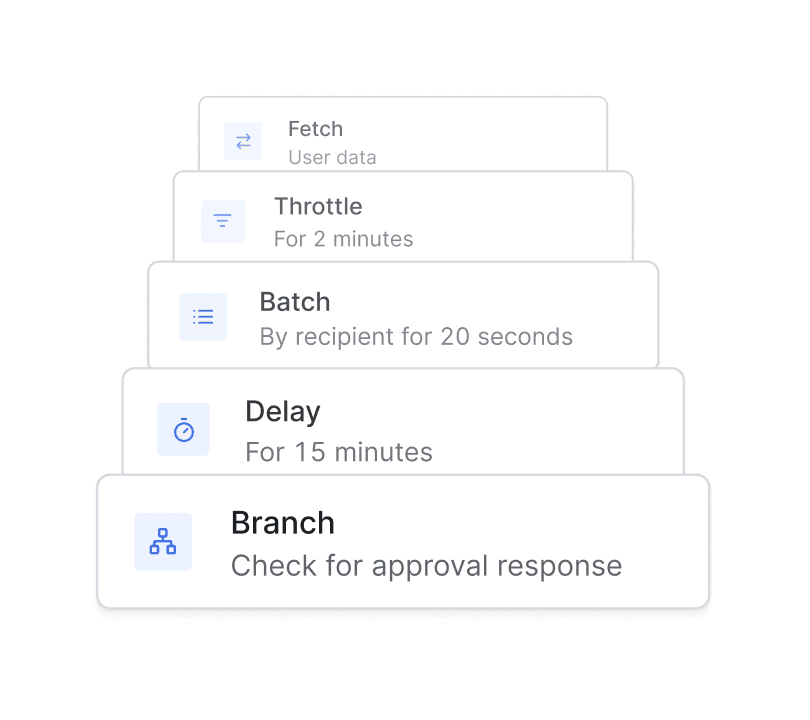
Key features include: Input, Output.
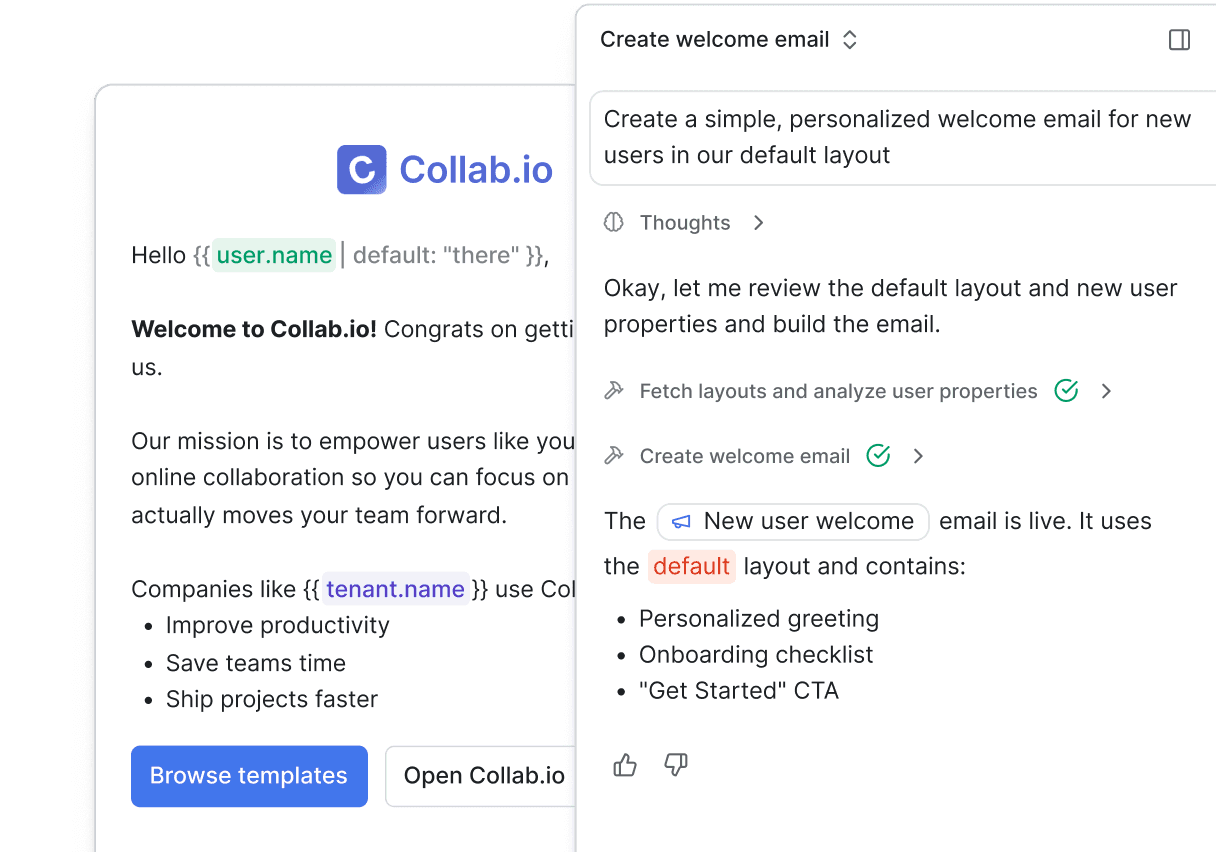
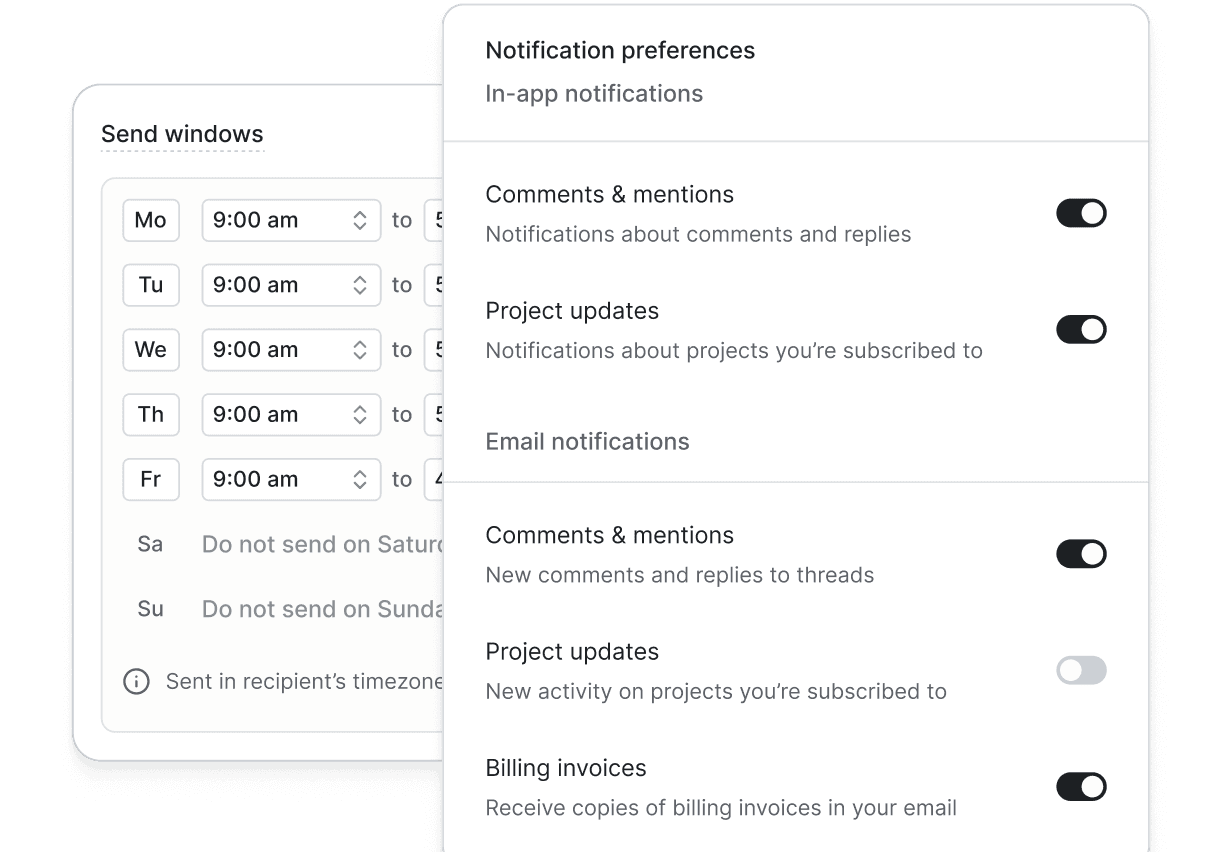
Knock is commonly used for: Streamlining team communication by consolidating notifications from multiple tools., Reducing notification fatigue by prioritizing important updates., Customizing notification settings based on user preferences., Integrating with project management tools to notify users of task updates., Providing real-time alerts for critical system events., Enabling user engagement through personalized notifications..
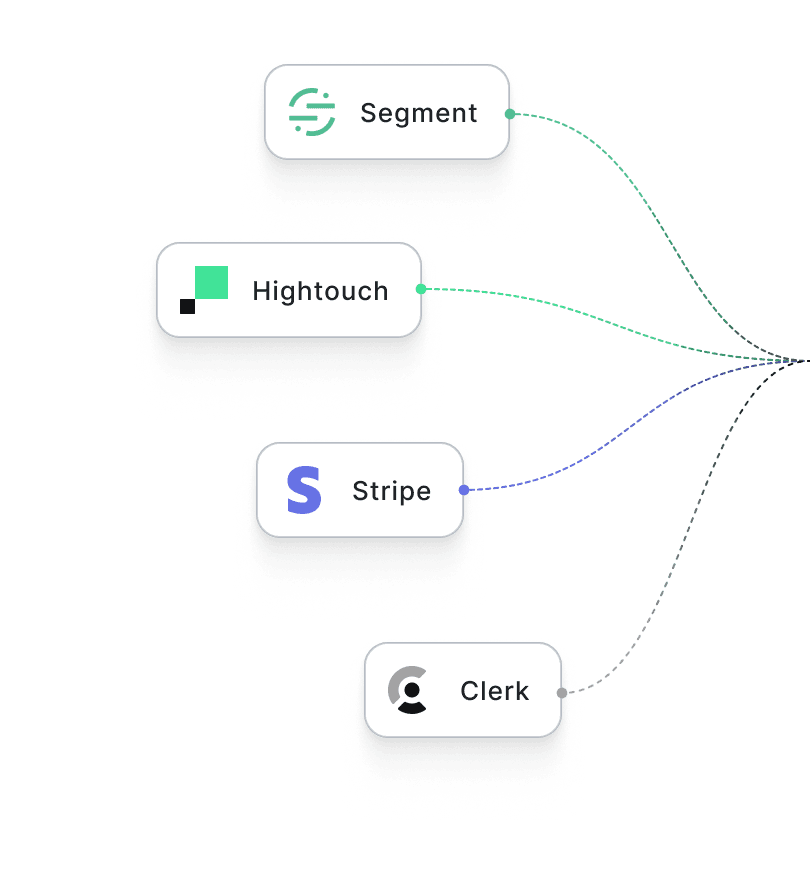
Knock integrates with: Slack, Trello, Jira, GitHub, Asana, Zapier, Google Calendar, Microsoft Teams.

Mitchell Hashimoto
Founder at Ghostty / HashiCorp
1 mention
Based on 34 social mentions analyzed, 15% of sentiment is positive, 82% neutral, and 3% negative.