Motion is built for individuals and teams of all sizes
Users generally praise Motion for its robust functionality and ease of use, particularly appreciating its performance in managing tasks efficiently. However, there are some complaints centered around its learning curve, which can be steep for new users. The pricing sentiment is mixed, with a few users finding it slightly expensive but acknowledging the value it provides. Overall, Motion maintains a strong reputation for reliability and effective task management, as shown by its predominantly high ratings and positive feedback.
Mentions (30d)
35
7 this week
Avg Rating
4.3
20 reviews
Platforms
3
Sentiment
14%
11 positive
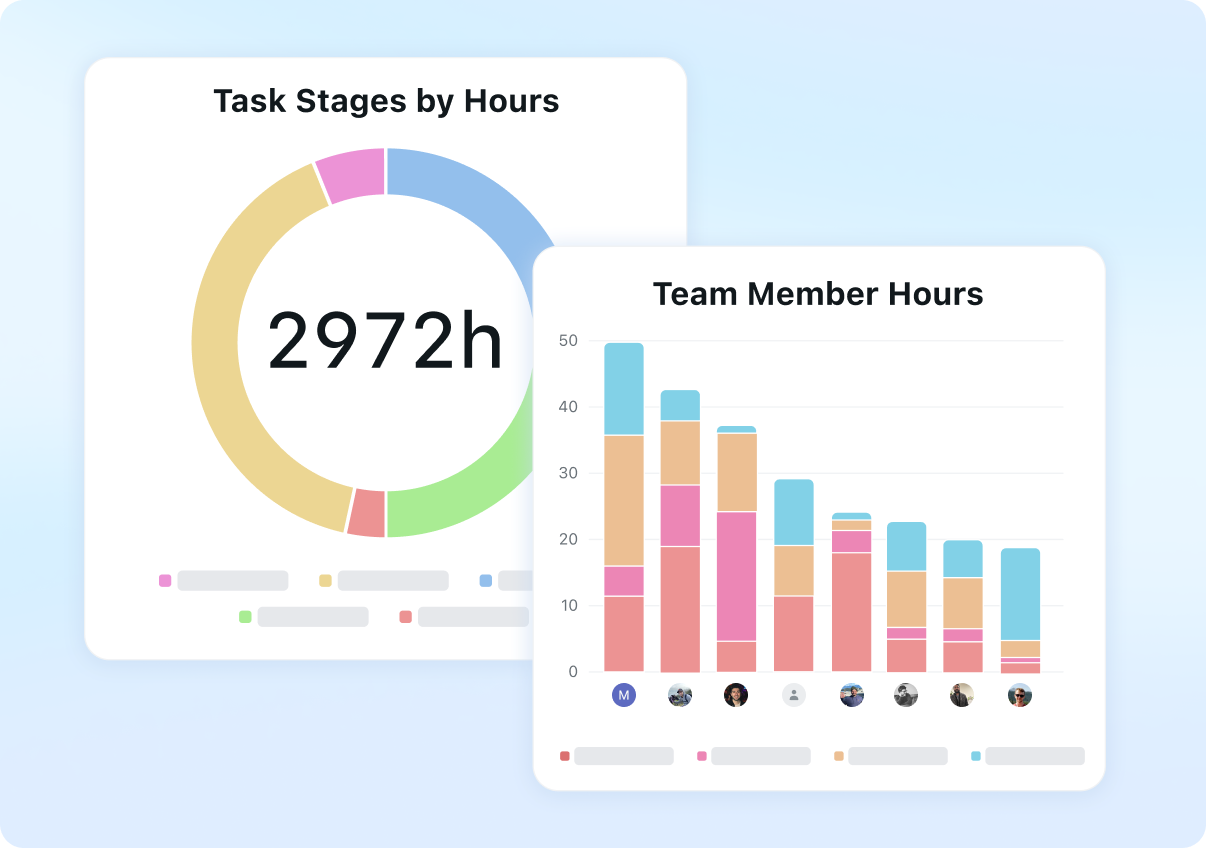
Users generally praise Motion for its robust functionality and ease of use, particularly appreciating its performance in managing tasks efficiently. However, there are some complaints centered around its learning curve, which can be steep for new users. The pricing sentiment is mixed, with a few users finding it slightly expensive but acknowledging the value it provides. Overall, Motion maintains a strong reputation for reliability and effective task management, as shown by its predominantly high ratings and positive feedback.
Features
Use Cases
Industry
information technology & services
Employees
88
Funding Stage
Series C
Total Funding
$65.1M
Is Flock just a poor US-centric copy of, globally active Genetec?
I've read all of Genetec's [customer stories](https://www.genetec.com/customer-stories/search) (the PDFs), and although I recognize these, as being Genetec marketing material (at least in part), they do contain insightful information, regarding implementation of surveillance systems; that is, from the perspective of a diverse palette of organisations. This palette primarily consists of: universities, school districts, ports, critical infrastructure providers, business to business companies, health care providers, real estate developers, gambling companies, (sports) venues, cities, public transportation services, airports, retailers, and foremost police departments. What most have in common, is the increasing scale at which they operate; setting in motion a search for IT-solutions, able to scale alongside organisational growth, and doing so in a cost-effective way. This entails: the centralisation of (previously "siloed") systems and departments, automatization of (previously time-consuming, or outright unmanageable) tasks, and proactive 'Data-Driven Decision-Making (DDDM)'; unlocking operational efficiencies and granular control over vast operations. Which is where Genetec introduces itself, primarily through [its partners](https://www.genetec.com/partners/partner-integration-hub?keywords) (including: hardware manufacturers, software solutions companies, system integrators, consultancy firms, etc.), often during an organisation's 'call for tender' or 'Request For Proposal (RFP)'; or it's recommended by other Genetec customers (including by law enforcement, to "community" partners: primarily businesses). The most recognizable partners, of the consortium-like construction, include: Axis Communications, Sony Corporation, Hanwha Vision, Bosch, NVIDIA, ASSA ABLOY, Intel, Pelco, Canon, Dell technologies, HID Global, FLIR Systems, Global Parking Solutions, and Seagate Technology. Alongside the Genetec-certified [hardware](https://www.genetec.com/supported-device-list) and software integrations (of which their partners' being actively co-marketed to customers), it also allows for custom integrations: through their 'Software Development Kits (SDKs)', and 'Application Programming Interfaces (APIs)'. So instead of single-vendor lock-in, organisations are effectively subject to multi-vendor lock-in (unless: spending resources, on custom integrations, is more cost-effective). Genetec's primary focus, lies on their extensive suite, of (specialized) software applications, deployed on: an on-site server, multiple (distributed) on-site servers (possibly federated: allowing for a centralized view over multiple implementations), in the "cloud" (i.e. someone else's server) as a '... as a Service' solution; or a combination of aforementioned (providing "cloud" flexibility). When using multiple applications, Genetec's 'Security Center' can unify all; meaning operators aren't required to switch between applications. And considering applications aren't limited to just camera surveillance, but also include: intrusion detection (intrusion panels, line-crossing cameras, panic switches, etc.), access control (electronic locks, access control readers (pin, card, tag, mobile, and/or biometric), door control modules, etc.), communication (intercoms, 'Public Address (PA)' systems, emergency stations, etc.) and ALPR (ALPR boom gates, gateless (license plate as a credential), enforcement vehicles, etc.); it allows for centralization of these systems (unless prohibited by strict IT policies). All of these technologies combined, primarily serve to: save on resources, protect assets, prevent losses, ensure operational continuity, and resolve disputes over: parking tickets, insurance claims (as a result of damages: suffered or caused on premise; potentially increasing premium), or even legal allegations ("increase the number of early guilty pleas"); all of course, under the guise of safety. Whether it be organisations individually, or "community" initiatives (often spearheaded by businesses, while citizens are left to follow); most circle back to previously outlined, financially-grounded motives. Resources include staff, who's function might become more versatile, or entirely obsolete (through efficiency gains), and might depend on events, reported by analytics (growing queues, areas requiring clean-up, crowd bottlenecks, etc.); meaning they too, are subject to this system: from onboarding ("minimise the time that elapses before they make a productive contribution") and throughout their career ("employee theft", "employee attendance", "agents' activities, collectively or individually", etc.). Previously, some organisations utilized analog cameras (having a recorder each), in which: a looping tape, would periodically overwrite previous recordings (minimizing retention periods: physically); which possbily caused quality degradations, sometimes to such a degree, footage could no longer serve as legal evidence (which too, is privacy-friendly).
View originalPricing found: $700, $250
g2
What do you like best about Motion?I love that I can send a link to someone that shows preferred times and available times they can meet with BOTH my business partner and me. I also like the permanent links I can set up that allow someone to use their special meeting link over and over again. Review collected by and hosted on G2.com.What do you dislike about Motion?It really wants to cram my day in with activities if I let it. I would like it if I could say, "I only want to do so much deep work in a day vs light work, and have so many breaks." If I let it set my entire schedule, I'd never get to pee. Review collected by and hosted on G2.com.
What do you like best about Motion?I can make for example perfect title animations for social media publications Review collected by and hosted on G2.com.What do you dislike about Motion?Not so easy to start with, you need to use some tutorial, but then is really useful Review collected by and hosted on G2.com.
What do you like best about Motion?Motion is so incredibly easy to use, and its integration with Final Cut Pro is awesome. I love the interface and hower powerful it is. Creating my own titles and motion graphics is a pleasure. Review collected by and hosted on G2.com.What do you dislike about Motion?It does NOT integrate with Adobe files very well. With After Effects, I can pull in Illustrator files and work with the layers. I can then update the AI files and my AE projects will update. Motion does not work with other files well at all and it is a huge detriment to my workflow, so I have to use AE for those projects. Review collected by and hosted on G2.com.
What do you like best about Motion?I found the layout and interface of motion to be very user-friendly and intuitive. I also like that the interface is consistent with all of the other programs in the apple lineup so jumping right in was easy. Review collected by and hosted on G2.com.What do you dislike about Motion?I have run into several instances where motion crashes for an unknown reason. So if you don't get in the obsessive habit of always saving you can lose your work. Review collected by and hosted on G2.com.
What do you like best about Motion?This gives us something that works directly with Final Cut and uses the same codecs. We are able to easily move items back and forth as needed. AS the name suggests Motion is fantastic for adding dramatic motions and graphics to any video. Review collected by and hosted on G2.com.What do you dislike about Motion?The rendering time and process can be cumbersome and time consuming at times depending on the graphics and video being used. Review collected by and hosted on G2.com.
What do you like best about Motion?I like that Motion has a user interface that is easy to use and understand. The interface is built very similar to that of Final Cut which makes it very nice when needing to switch between the two applications to achieve different effects. With Motion you are able to achieve the (as the name states) motions that you aren't able to achieve with Final Cut. Review collected by and hosted on G2.com.What do you dislike about Motion?I think the one downfall to Motion which has gotten better is the time it takes to render and save videos. Especially with the videos that have a lot of movement to them which creates a larger file size. Also it seems that the compression you receive with Motion isn't to the degree of the compression you get with other pieces of software like Final Cut or even the dreaded iMovie. Review collected by and hosted on G2.com.
What do you like best about Motion?I like that Motion is easy to integrate with Final Cut Pro X. I can drop transitions and titles into Motion and save them, easily to drop into a Final Cut Pro project later. I can modify any aspect of those transitions that I want which gives me even more options when working on a wedding video or company add. It also gives me a lot of masking features for special effects. Review collected by and hosted on G2.com.What do you dislike about Motion?I don't like how difficult it is to learn how to use Motion. Sure, it's intuitive and powerful but there are so many features, I have to go to You Tube to learn how to do anything. But that's what you get with a motion graphics software. It can be complicated because there are so many powerful features. Review collected by and hosted on G2.com.
What do you like best about Motion?After Effects was hard for me to pick up, but for the affordable cost & tons of feature Apple Motion is a breeze. If your preferred video editor is FCP you have to have this! Review collected by and hosted on G2.com.What do you dislike about Motion?I would like to see more functionality with exporting/importing to FCP. For now I'll finish a project in motion then I can do specific cuts & audio editing in FCP. Review collected by and hosted on G2.com.
What do you like best about Motion?after countless hours looking for a program that can fit our needs, motion is a great program that helps you create cool effects and GFX that can help your production quality tremendously Review collected by and hosted on G2.com.What do you dislike about Motion?what I like about Motion is the price, I should be cheaper to use, and that the things are menus are hidden, so we can use it and really get good at the idea of having it in our arsenal Review collected by and hosted on G2.com.
Storyboard generated from GPT image 2.0
I gave GPT a set of prompts that I found a bit too complicated, and to my surprise, it generated content that matched perfectly. I'm very curious about how GPT Image 2.0 works behind the scenes, and how it can understand and produce high-quality images so quickly. prompt:**PROJECT FILE: HIGH-ALTITUDE ASCENT // PREMIUM HARDSHELL CAMPAIGN** **FORMAT: ARRIRAW 4.5K / KODAK VISION3 50D 5203 EMULATION** **DIRECTOR'S PRE-PRODUCTION VISUAL BOARD** --- ### Top Left Area | Character Lock Zone **[SUBJECT]** 35-year-old male mountain guide/extreme climber. **[WARDROBE]** Top-of-the-line professional jacket (matte rock grey with minimal dark orange taped details), heavy-duty climbing harness. **[VIEWS]** - **Front:** The jacket is fully zipped up, hood pulled up, showcasing a three-dimensional cut and natural drape. - **Side:** Shows ample shoulder and arm movement without bulkiness. - **Back:** Shows the windproof and breathable back panel structure. - **3/4 View:** Dynamic standing pose, holding an ice axe. **[REALISM NOTES]** Realistic human bone structure, slightly asymmetrical. The face has the rough texture of high-altitude red and sun-dried skin, with clearly defined pores and stubble with a frosty look. Rejecting perfect plastic skin, rejecting CG aesthetics. Like a real makeup test photo. --- ### Top Right Area | Expression + Motion Keyframes (EXPRESSION & ACTION) **[EXPRESSIONS]** **Focused:** Slightly furrowed brows, resolute gaze, staring at the rock face above. **Bracing:** Squinting against the strong wind, facial muscles tense. **Breathing:** Lips slightly parted, exhaling real white mist. **[ACTIONS]** **Hood Adjustment:** Pulling the drawstring of the hood with one hand. **Ice Axe Swing:** Arm raised high with force, no pulling sensation under the armpits of the jacket. **Brushing Snow:** Brushing snow off the shoulders, demonstrating the fabric's water-repellent properties. --- ### Upper Middle Area | CAMERA PLAN **[GEAR]** ARRI Alexa Mini LF + Master Prime lens set. **[LENSES]** 24mm (wide-angle environment), 50mm (medium-range tracking shot), 100mm Macro (fabric close-up). **[MOVEMENT PLAN]** - **Shot A (Drone/Crane):** A wide, overhead view, slowly pushing in along a snow-covered ridge. - **Shot B (Handheld):** Shoulder-mounted camera, following the character's movements, with realistic breathing and slight shaking. - **Shot C (Slider):** A close-up panning shot close to the clothing, showing water droplets sliding off. --- ### Central Main Area | Continuous Story Shots (STORYBOARD: 8 PANELS) **[PANEL 01]** - **Shot:** 01 | 24mm | Wide Shot (EWS) | Slow Push-In - **Action:** A tiny figure struggles through a massive natural storm on a snow-covered ridge. - **Detail:** Strong atmospheric perspective; the wind and snow create a realistic fog effect; slight chromatic aberration at the edges of the image. **[PANEL 02]** - **Shot:** 02 | 50mm | Mid Shot | Shoulder-mounted tracking shot - **Action:** A man walks against a blizzard; the strong wind whips against his rain jacket, creating realistic physical wrinkles on the surface, but the overall silhouette remains sturdy. - **Detail:** Noticeable film grain; the snow-capped mountains in the background are slightly out of focus. **[PANEL 03]** - **Shot:** 03 | 100mm Macro | Extreme Close-up (ECU) | Fixed Macro - **Action:** Icy snowmelt hits the shoulders of the rain jacket. - **Detail:** The lotus effect is realistically rendered—water droplets condense and quickly roll off the matte micro-ripstop fabric without penetrating. **[PANEL 04]** - **Shot:** 04 | 85mm | Close-up of face (CU) | Slow motion - **Action:** The man stops and looks up. Real ice crystals cling to his eyelashes, and his breath dissipates at his collar. - **Detail:** Natural skin tone, without excessive blurring; realistic catchlight in his eyes reflects the snow wall ahead. **[PANEL 05]** - **Shot:** 05 | 35mm | Low Angle Full | Handheld, low-angle shot - **Action:** He swings his ice axe into the ice wall, climbing upwards. - **Detail:** Emphasis on showcasing the flexibility of the jacket during vigorous movement; no feeling of restriction; realistic light and shadow highlight the garment's three-dimensional cut. **[PANEL 06]** - **Shot:** 06 | 100mm Macro | Close-up Detail (Insert) | Shallow Depth of Field - **Action:** A heavily gloved hand pulls a waterproof zipper across the chest. - **Detail:** The matte waterproof rubberized finish of the zipper and the clearly visible scratches on the brushed metal zipper pull exude a strong sense of industrial design. **[PANEL 07]** - **Shot:** 07 | 50mm | Over-the-Shoulder Lens (OTS) | Slow Zoom In - **Action:** Over the man's shoulder, we see him finally reaching the summit, sunlight piercing through the clouds and shining on him. - **Detail:** Realistic lens flare, not exaggerated, natural glow. **[PANEL 08]** - **Shot:** 08 | 35mm | Mid Shot | Still Camera - **Action:*
View original"Talk" [ft. Sara Silkin] - Multi-Character AI Motion Capture Experiment
In collaboration with the amazingly talented Jibaro's choreographer. More information on exactly how I made this, through the comment section. submitted by /u/santi_0608 [link] [comments]
View originalReconsider using Claude, hit by too many false positive blocks, and hundreds of user reports
https://preview.redd.it/hevkfnz46v2h1.png?width=3170&format=png&auto=webp&s=0abde4ef1d7d647da9e376db88ef4ae5f429c5e9 reproducible example: claude -p "please read source https://source.chromium.org/chromium/chromium/src/+/main:third_party/blink/renderer/modules/device_orientation/device_motion_event_pump.cc and explain to me" related issues on github: False positive policy block on OSS governance/security files (CodeQL, CODEOWNERS, CoC) #61688 [BUG] CVP repeatedly declines homelab sysadmins — no path for infrastructure owners managing personal hardware #61668 [Bug] Safety classifier blocks routine code analysis for paid users (started 2026-05-23) #61664 [BUG] False positive - legitimate medical-education content flagged as unsafe #61663 False-positive Usage Policy block mid-session (req_011CbJudbehY5Yi6gtM4xko4) #61660 [BUG] Persistent false-positive AUP violation blocks entire AI research project (Opus 4.7) #61659 [Bug] Anthropic API Error: Usage Policy violation blocking TTRPG content in Claude Code CLI #61658 False-positive content filter blocks benign UI animation prompts in Claude Code #61657 [Bug] Anthropic API Error: Overly aggressive Usage Policy filtering on biomedical research requests #61656 [BUG] AUP repeatedly throwing false positives - live issue ongoing - hundreds of similar reports #61655 [BUG] AUP false positives during scientific manuscript editing request #61654 [BUG] : API Error: Claude Code is unable to respond to this request, which appears to violate our Usage Policy #61653 False positive: Usage Policy block on technical markdown integration task #61652 [BUG] Safety classifier repeatedly blocks legitimate constructed language (conlang) development #61650 False-positive cyber-safeguard intervention on legitimate systems-engineering work in Claude Code #61646 [BUG] erroneous API Error: Claude Code is unable to respond to this request #61645 [BUG] False positive safety block: triggered without apparent reason during game dev session #61644 submitted by /u/jimages [link] [comments]
View originalBuilt an intelligent web video editor for claude (and other agents) via MCP
Hey! I'm a first time founder and long-time video editor. I've spent the last thousand-ish hours building this, and I'm super excited to show you guys https://usevyra.com But first, you can try a demo here with preloaded footage: https://app.usevyra.com/demo (you can connect your own claude/claude code agent) The app index/preprocess footage that comes through so that claude can search semantically and understand the footage it's working with instead of editing blindly. I'm especially proud of all the editing features our app supports, including motion graphics, music sync, smart masking, transcript-editing, color grading, and over 30 effects, so it feels less like a gimmick and actually something usable for people. Would love for you guys to try and give any feedback, thank you!! :) submitted by /u/kale_eeb [link] [comments]
View originalI tested Claude + After Effects so you don't have to guess anymore
I've been seeing a lot of curiosity and, honestly, a lot of hesitation around using Claude with After Effects. So many motion designers are in the "I've heard of it, but I don't really get what it does or how it works" camp. So I decided to go deep on it. I tested it across real motion design workflows and documented everything I found. I just put together a full breakdown that answers the questions I kept seeing over and over: What Claude can actually do inside After Effects. Where it helps, where it doesn't, and where it straight-up wastes your time. How setup works, because this was way less obvious than it should be, and most guides skip the parts that trip you up. Real use cases for motion designers and not generic "AI can help you brainstorm!" stuff. I'm talking about specific things like expression generation and workflow shortcuts that actually make a difference in daily work. There are things it's genuinely useful for and things that are still faster to do manually. If you're a motion designer who's been curious about Claude but hasn't taken the plunge because the info out there feels either too vague or too hype-y - this is for you. It's also for you if you've tried it once, got underwhelming results, and figured "yeah, not for me." There's a good chance you just didn't have the right setup or prompts. What this isn't: It's not a "Claude will replace you" video. It's not a sponsored thing. It's me sharing what I learned after actually using it in my workflow, so you can skip the trial-and-error phase. You can find the breakdown here if you're interested in learning more: https://youtu.be/ayZnTA4dnZk?si=y0ri5-rU5ejwK4QV Happy to answer any questions in the comments, too. submitted by /u/KashuAcademy [link] [comments]
View originalHow to Create a Night Car Selfie with GPT Image 2.0? Prompt Included!
We tested a darker, more editorial-style car selfie concept with GPT Image 2.0, and the result felt surprisingly realistic. Instead of making a direct AI portrait, I wanted the shot to feel like a late-night iPhone photo taken inside a car. The main frame only shows the hand holding the phone, while the girl’s face appears inside the iPhone camera preview. That small framing choice makes the image feel much more natural, like a real candid lifestyle shot rather than a typical generated portrait. What makes this prompt work: the subject is only visible through the phone screen dark premium car interior warm blurry city lights outside the window realistic low-light noise and slight motion blur iPhone-style framing without flash cinematic shadows and moody night atmosphere It gives the image a more believable “captured by accident” feeling. Go to GPT Image 2.0 Generator Write the full prompt given below Upload your reference image Click to the "Generate" and get the edited image Prompt: "The photo is taken inside a car at night. Only a woman’s hand and the iPhone are visible in the frame; the girl’s face appears only on the phone screen. The camera is positioned from the passenger seat side, aimed toward the windshield and the phone being held in one hand in front of her. In her hand is the latest black iPhone Pro in horizontal position. On the screen, the iPhone front camera interface is open with visible camera buttons, focus frames, and UI elements. On the phone screen, a close-up of the girl’s face inside the car is visible: her lips are slightly parted and she is touching her lower lip with a thin black object resembling a lip pencil. The girl on the screen is wearing black clothing, softly illuminated by the phone’s light. The hand holding the phone has long fingers with a short square French manicure. The rest of the frame is very dark; the car interior is black and premium-looking, with part of the window and dashboard visible. Outside the window is a nighttime street with warm blurry city lights, dark tree silhouettes, and subtle reflections of light on the glass. The shot is very dark with a cinematic night aesthetic and rich lifestyle mood, 9:16 ratio. Shot on an iPhone at night without flash, realistic photo, slight motion blur, high-contrast shadows, no filters, do not blur the background completely. Hair is voluminous." Would love to see other versions of this kind of indirect selfie / phone-screen framing. Share your similar night car iPhone selfie photos below! submitted by /u/DataGirlTraining [link] [comments]
View originalCoffee, Claude, and Remotion is all you need to make launch videos.
https://reddit.com/link/1tik0qe/video/9bh6ypr3ca2h1/player A few hours, Claude Code + Remotion, 4 black coffees, no design tools, no After Effects, no editor. The whole trick: Remotion is React for video. You write JSX, you get an mp4. Every animation is interpolate(frame, [start, end], [from, to]). That means Claude Code can write the entire video for you — it already knows React, animation is just numbers, and you can iterate the same way you iterate on a landing page. Change a value, re-render, see what happens. That feedback loop is the whole unlock. I described the scenes I wanted, Claude wrote them, I tweaked timing and cut whatever felt slow. 5 small things that made it not look like a dev made it: Crossfade every cut. Don't hard-cut between scenes. Overlap them and blur-fade. Instantly stops feeling like a slideshow. One easing curve everywhere. cubic-bezier(0.22, 1, 0.36, 1) (expo-out) on every animation. Consistency in motion is 80% of "looks designed." Film grain + vignette overlay. Two dumb components on top of everything — SVG noise at 2% opacity, soft dark vignette. Cheapest cinematic upgrade in existence. Layered audio, not one track. Background music low, plus targeted SFX - whoosh only on chapter cuts, typing during the hook, pop on the CTA. Overdoing SFX is the #1 amateur tell. Cut ruthlessly. If a scene doesn't earn its place in 3 seconds, kill it. The first cut is always too long. Stack: Remotion, React, TypeScript, Claude Code, Google Fonts (DM Sans + Crimson Pro), a few SFX from freesound.org, one royalty-free background track. $0 in tools. Bonus meta thing: the video isn't a screen recording of my product. It's a Remotion-built launch video that features a real video output from my product (the Cultured AF deck one). So I used InkMotion to make the demo footage inside the launch video. Probably should've just used InkMotion to make the whole launch video and saved the 4 coffees. Next time. Happy to answer specifics in the comments. submitted by /u/Top_Commission_8567 [link] [comments]
View originalHow to Create Viral Stadium Fan Cam Storyboards with GPT Image 2? Prompt Below!
This was one of the most realistic storyboard styles I’ve generated recently with GPT Image 2. The goal was to recreate the feeling of a real televised football broadcast mixed with cinematic commercial production — authentic crowd emotion, live camera imperfections, shallow telephoto depth of field, broadcast overlays, and natural sponsor integration. What makes this style work so well: realistic stadium crowd energy sports TV broadcast aesthetics cinematic advertisement framing emotional candid reactions ultra realistic lighting and skin texture natural product placement that feels like a real sponsorship commercial The storyboard panels can later be animated inside Seedance, Kling, Veo, or similar AI video tools to create a full fan-cam style commercial sequence. Tools used: GPT Image 2 → storyboard generation Seedance / Kling → animation & motion Prompt: "Hyper-realistic cinematic storyboard sheet for a 15-second sports broadcast commercial, beautiful stylish woman with natural blonde wavy hair wearing a cream sleeveless turtleneck knit top and pearl earrings sitting naturally among real football audience inside a packed stadium, yellow and blue fans cheering in background, realistic live sports broadcast camera perspective, authentic stadium lighting, soft cinematic blur, realistic skin texture and facial details, natural candid expressions, she watches the football match intensely while holding a blue Japanese premium beverage can naturally in her hand, realistic crowd interaction, broadcast scoreboard overlays, sports network watermark, smooth TV-commercial camera shots, ultra realistic photography style, documentary sports coverage aesthetic, realistic depth of field, live match atmosphere, product integrated naturally like real sponsorship footage, final shot close-up where she smiles and blows a flying kiss toward the camera, emotional crowd energy, cinematic realism, premium advertisement production storyboard layout, professional shot sequence panels, real broadcast feeling, highly detailed realistic storyboard sheet --ar 16:9" Would love to see more people experimenting with this format. submitted by /u/DataGirlTraining [link] [comments]
View originalWaiting for your prompt to finish? ssh vimarcade.app to play games in terminal!
open a terminal type: ssh vimarcade.app type yes and begin playing! These games were designed to assist with learning vim motions, so hjkl are the primary movements. See if you can top the leaderboard! (Vim Flyer has a secret menu too - type w for WASD mode and i for Insantity mode). (I created the vision, game selection, and vibe, claude opus built the plan and claude code executed.) submitted by /u/awriterabroad [link] [comments]
View originalI replicated Anthropic's Generator-Evaluator harness to build a website through 12 adversarial AI iterations - here's the result and what I learned
Anthropic recently published their harness design for long-running apps — a multi-agent architecture inspired by GANs where a Generator builds code and an Evaluator critiques it in a loop. I built my own version using Kiro CLI and used it to generate a marketing website for my project Mnemo (persistent memory for AI coding agents). The architecture: Planner (runs once) → Generator ↔ Evaluator (12 iterations) Each agent is a separate CLI process with zero shared context. They communicate only through files (spec.md, eval-report.md). The Evaluator uses Playwright to actually browse the live site — not just read code. What made it work: Clean slate per invocation — each agent starts fresh, reads only its input files. Prevents context anxiety. Playwright MCP for testing — the evaluator navigates, clicks, resizes viewports. Catches visual bugs code review never would. Anthropic's frontend design skill — explicitly penalizes generic AI patterns (Inter font, purple gradients, card layouts). Forces creative risk-taking. Continuous iteration, not retry-on-failure— all 12 rounds run regardless. Each one improves. The progression was wild: Iteration 1: Exactly what you'd expect from AI — functional but forgettable Iteration 4: Generator pivoted to "Terminal Noir" — IBM Plex Mono, amber on black, grain textures, scanlines. This is the kind of creative leap that doesn't happen in single-shot generation. Iterations 5-12: Polish, accessibility, responsive fixes, reduced-motion support Stats: Total time: 3h 20min Iterations: 12 (generator + evaluator each) Manual code written: 0 lines (I fixed a few visual issues after) Tech: Next.js, Tailwind, Framer Motion, TypeScript Live result: https://mnemo-mcp.github.io/Mnemo/ Documentation : https://github.com/Mnemo-mcp/Harness Key takeaway: The model is the engine. The harness — the constraints, feedback loops, and adversarial structure around it — is what determines whether you get AI slop or something genuinely distinctive. submitted by /u/killerexelon [link] [comments]
View originalClaude picks theta measured from the top of the pendulum while GPT-4o picks it from the bottom, and you can see the difference in about two seconds
I was running the same double pendulum prompt through Claude and GPT-4o side by side, both panels rendering through the same host drawer, and within seconds the two simulations looked like completely different physical systems. Took me a minute to figure out what was happening. Claude measured theta from the up vertical (so theta=0 means the arm is pointing straight up). GPT-4o measured theta from the down vertical (theta=0 means the arm hangs straight down). The host renderer in public/workers/simulator-host.js just reads info.theta1 and info.theta2 and draws, so whatever convention the model chose is exactly what you see on screen. No drawing tricks, no style differences. The visual mismatch is a real physics mismatch. The thing that made this click for me is that both conventions are technically valid. Most classical mechanics textbooks use theta from the down vertical because it makes the equilibrium point theta=0, which is tidier for small angle approximations. But theta from the up vertical is also standard in plenty of references. Claude just... picked the other one. And it committed to it consistently through the equations of motion, the initial conditions, everything. It wasn't wrong, it just made a different choice than GPT-4o on an ambiguous part of the prompt. What's interesting from a Claude behavior perspective is that this isn't a reasoning failure or a hallucination. The code Claude produced was internally consistent. The equations of motion were correct for its chosen convention. The Runge Kutta integration was clean. It just interpreted "theta" differently than the other model did, and because both panels render through one shared host drawer, that interpretive difference became immediately visible. I noticed this while working on Physics Bench, an open source side by side benchmark where every model gets the same generation contract (function createSimulator(...) in lib/prompt.ts) and the host owns all rendering. Models only implement step, getInfo, and reset. They never touch draw. So any visual difference between panels is guaranteed to come from a real difference in the simulation logic, not from cosmetic rendering choices. Built with Verdent. The conversation inspector on each panel shows the full transcript, and Claude's reasoning about the coordinate system is right there in the code comments it generated. It explicitly noted its convention choice. GPT-4o did not comment on its choice at all, just used the other one silently. I keep going back to the fact that a unit test of the math would not have caught this. Both models produce correct physics for their respective conventions. You only see the split when you render them next to each other through the same drawing code. submitted by /u/Ill_Awareness6706 [link] [comments]
View originalLooking for an AI / system to basically manage my entire life 😭 Does this even exist?
Hi everyone, I genuinely feel overwhelmed and I’m wondering if there’s an AI tool, app, or system that can help me organize basically my entire life. I’m juggling a demanding full-time job, university, building a business from scratch, personal finances, and full wedding planning, and I feel like I need a personal chief of staff / executive assistant for life 😭 I’m looking for something that could help with: Work/project management (prioritizing, deadlines, helping me think through work) Calendar & scheduling (actually time-blocking and organizing my days realistically) Finances/budgeting and helping me stay on track financially Entrepreneurship/business building from scratch (planning, prioritization, next steps) University/studying support Wedding planning (timelines, vendors, budgets, to-do lists, reminders, etc.) Personal goals, habits, routines, and becoming a more organized/productive version of myself What I’m looking for is something that feels like a life operating system, not just a chatbot that answers questions. Ideally, I’d love something that: helps me decide what to prioritize reorganizes things when I inevitably fall behind 😅 integrates with calendars/tasks feels proactive instead of reactive I struggle a lot with overwhelm and procrastination when too many things pile up, so if you’ve found a setup that genuinely changed your life, I would LOVE recommendations. What are you actually using? One tool? A stack of tools? AI agents? Claude, ChatGPT, Motion, Notion, Reclaim, Goblin Tools, Sunsama, something else? And most importantly: what actually works in real life? submitted by /u/Lucky_Lie_917 [link] [comments]
View originalCan we acknowledge that Anthropic watches open sourcers and copies them?
I’ve been seeing over the past few months an interesting phenomenon, an open sourcer makes a tool or MCP < Anthropic adds functionality for that exact thing a couple weeks later < repeat. The biggest examples are Openclaw (like 5 features, including cowork), persistent memory across chats, and latest example of the “goal” feature being added. This is obvious and I’m not really saying anything that’s revolutionary here, I’m sure we’ve all noticed it. My larger observation, no credit is given, they’re just copying and then providing a direct replacement for things open sourcers thought of. At this level, we’re all learning from each other. AI like it is right now is very new and you could even argue that they’re not copying, that we’re all just thinking the same things. The deeper issue though is that this shows a dystopian effect of AI, the big companies get the credit widely for things others have done. More people have heard about Claude cowork than have heard about Openclaw, and the result of the guy who made it was getting a job at OpenAI. He wasn’t able to make this into a business, it’s not how open source has been for the past 20 years where an idea can be copied but not completely absorbed. Ideas are being absorbed, the person who made it doesn’t get credit by the masses, then gets hired by the companies that take their ideas. Is this a bad thing per se? Hard to fully know yet but it creates a weird dynamic where anything you put out there about MCPs or AI is gonna be absorbed and you won’t get credit for it. What if this expands into other industries and professions? Is this something that would be good in the scientific field? Imagine if Newton discovered the laws of motion but he used AI to formalize the equations, the AI companies saw the chats, took the idea directly from him, and he gets no credit. We’re sprinting towards a future where all that exists is the big companies, they get the credit and make the decisions. Sounds a lot like we’re becoming the coal miners living in company towns again, not owning anything or getting any credit, just being a cog in the machine. Edit: grammar submitted by /u/TheOnlyVibemaster [link] [comments]
View originalSharing OpenPets, a live usage and task-status for Claude code and Cowork
Codex Pets are fun and I'm often switching between Claude Code and OpenCode so I built OpenPets, an open-source project with a native macOS desktop app providing a CLI and an MCP server to connect any agents. A Swift library is included you can use to embed the system in your own apps. There's also a plugin system to build on top. This is how you get live weekly Claude usage or the battery status. You can imagine how cool it can become when you extend the animation sprites to support more motions or ambient animations: - a weather plugin and the right assets could bring rain to your character - a low battery could make your character go to sleep. Pure fun project but notifications and quick data in the cloudy bubbles are really useful to me. https://github.com/alterhq/openpets submitted by /u/samuelroy_ [link] [comments]
View originalI told Claude to create a PS5 controller in blender
nice try submitted by /u/Ok-One1885 [link] [comments]
View originalPricing found: $700, $250
Motion has an average rating of 4.3 out of 5 stars based on 20 reviews from G2, Capterra, and TrustRadius.
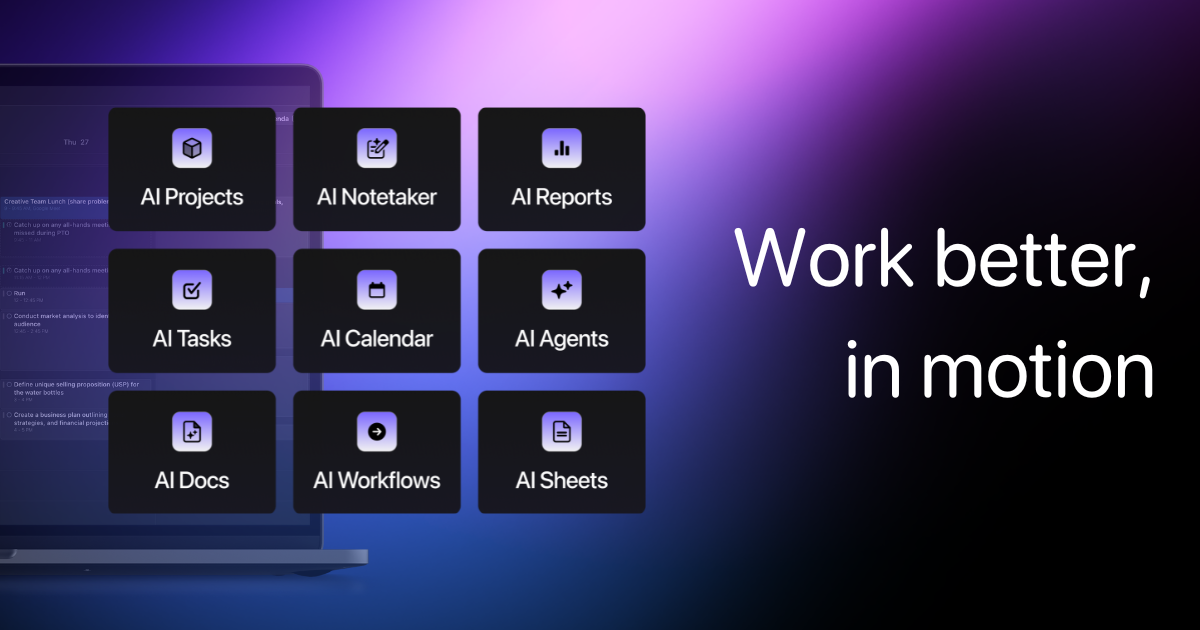
Key features include: Create, edit, and summarize content with AI, Search across all your notes and docs instantly, Ask anything. Motion finds the answer fast., “Motion helped me get promoted 12 months faster than peers”, Your existing, average tools, Normal Task Manager, Normal Project Manager, Normal Docs.
Motion is commonly used for: Automating daily scheduling to optimize time management, Integrating with existing calendars to streamline appointments, Prioritizing tasks based on deadlines and importance, Generating daily summaries of tasks and meetings, Facilitating team collaboration through shared task lists, Providing reminders for important deadlines and events.
Motion integrates with: Google Calendar, Microsoft Outlook, Slack, Trello, Asana, Zoom, Notion, Evernote, Todoist, Dropbox.
Andrej Karpathy
Former VP of AI at Tesla / OpenAI
3 mentions
Based on user reviews and social mentions, the most common pain points are: token cost.
Based on 78 social mentions analyzed, 14% of sentiment is positive, 85% neutral, and 1% negative.